Repair from the inside out, all the way through the wall - not a surface patch pretending to be a fix. Injection fills the crack through its full thickness, and nothing gets recommended until it's actually been assessed.
WHY HAMILTON BASEMENTS CRACK
This is one of the most common calls we get, and it's not hard to see why. Hamilton sits on lakebed clay that shifts with every wet and dry season, and the freeze-thaw cycles that hit multiple times a winter keep forcing water into wall openings and expanding them each time it freezes. On top of that, hydrostatic groundwater pressure is pushing against basement walls from every side through the wetter months.
Most cracks show up within a home's first 10 years, as the concrete works through its long-term curing and shrinkage cycle. Those early shrinkage cracks tend to be narrow and low-risk on their own, but they're exactly the pathway hydrostatic pressure exploits as the home ages. A hairline crack at year 5 is a leaking crack by year 15 if it's never sealed.
Every job starts with an honest read on what the crack actually means. Shrinkage cracks, settlement cracks, and pressure-driven cracks get treated differently, because they call for different fixes. You won't get sold a $4,000 repair for something that needs $600 of injection, and you won't get told to monitor something that actually needs attention now.
Most of this work happens entirely from the interior - no excavation, no exterior disruption, nothing to your landscaping. Port installation, surface sealing, injection, and cleanup usually fit into a single-day appointment.
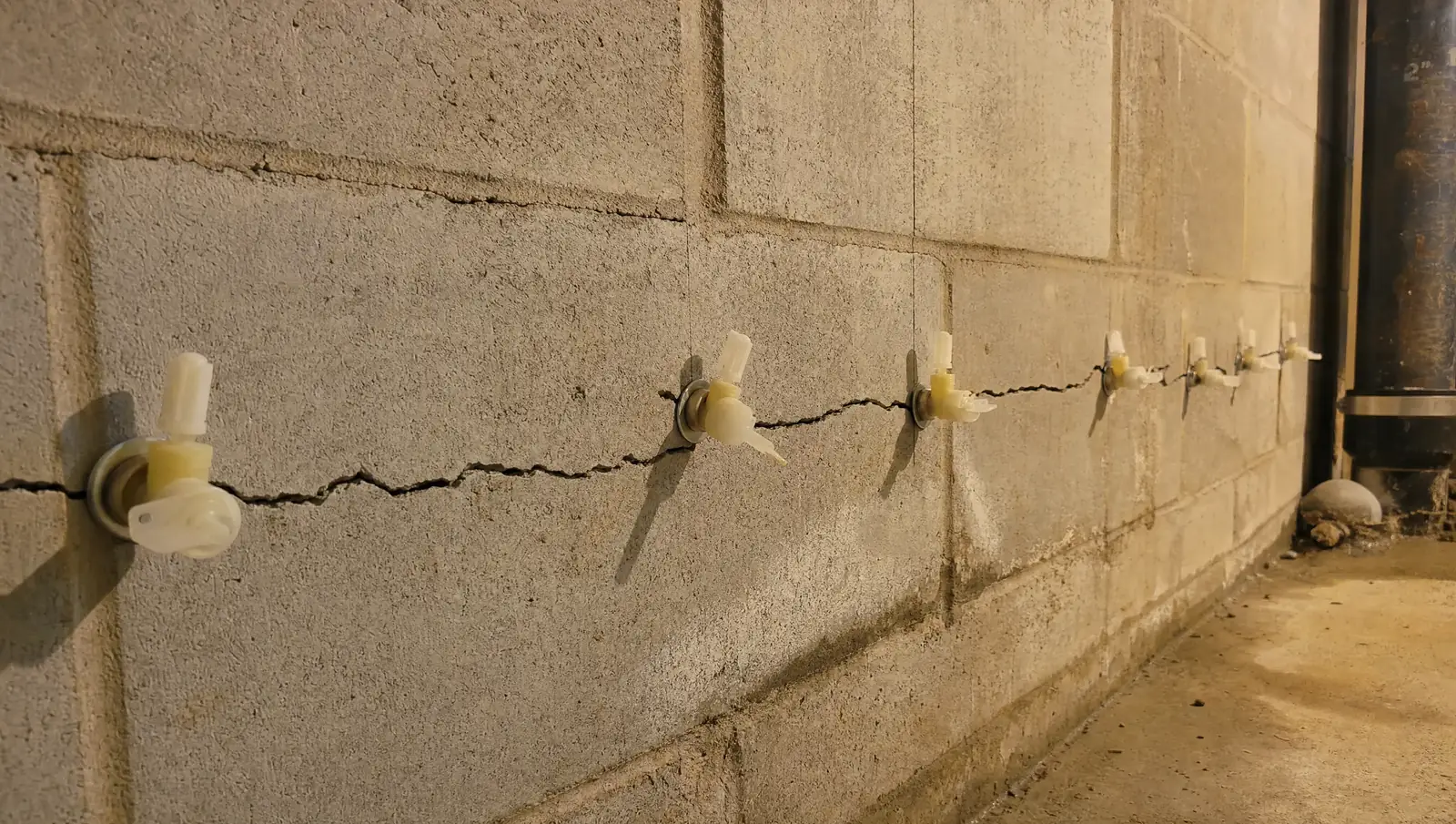
Polyurethane injection ports installed along a poured concrete basement wall crack in a Stoney Creek bungalow.
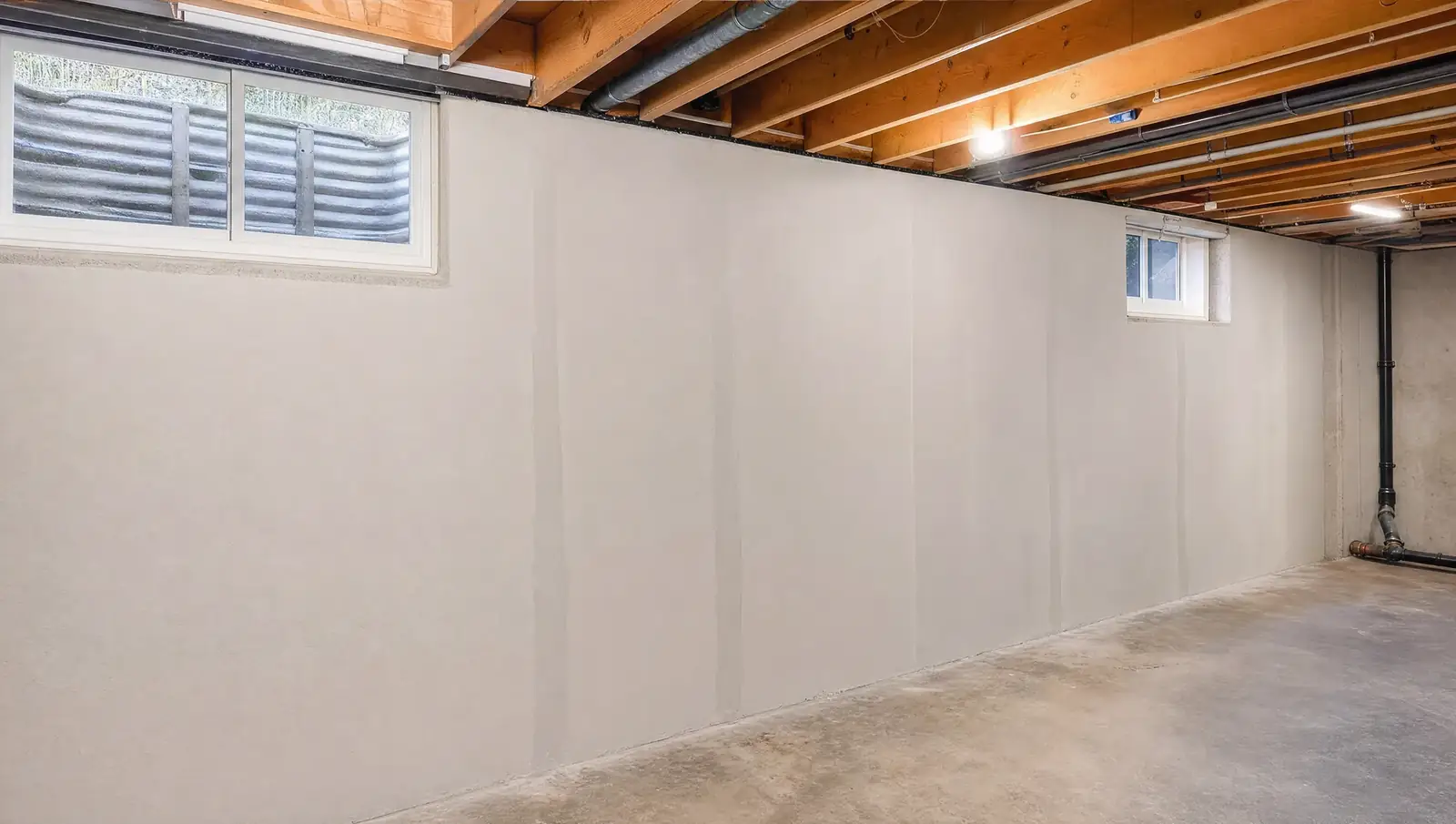
Any of these conditions is reason enough for an assessment.
PRICING
Pricing comes down to crack length, width, moisture condition, and whether a structural assessment changes what's recommended. A narrow dry shrinkage crack is straightforward injection work; a wide, leaking crack showing signs of wall movement needs an assessment before we'll put a number on it.
We don't price this over the phone. Photos help us gauge urgency, but they don't replace an actual in-person look. A written fixed-price quote follows within 48 hours of that assessment.
COMMON QUESTIONS
What Hamilton homeowners ask most the moment they spot a crack.
A few forces specific to this region are usually to blame. Lakebed clay soil swells when wet and shrinks when dry, putting variable pressure on basement walls all year. Freeze-thaw cycles - often several per winter - force water into existing hairline cracks and widen them a little more each season. Most cracks in Hamilton homes trace back to one or more of these ongoing forces.
DIY sealants and hydraulic cement only address the visible surface, not the crack's full depth. Surface-only repairs fail once the underlying movement continues or hydrostatic pressure builds behind that sealed face. Proper injection fills the crack completely, from interior to exterior wall face - a permanent repair, not a patch that looks fixed for a season.
For an actively leaking crack, polyurethane foam injection is the right method. It goes in at low pressure through ports along the crack, expanding and curing on contact with moisture to fill the crack from interior to exterior. It stays slightly flexible after curing, which lets it absorb minor seasonal movement without opening a new leak path.
Horizontal cracks are always a structural concern. Stair-step cracking in block walls points to settlement. Anything wider than 3mm with lateral offset is structural. Hairline vertical cracks in poured concrete with no offset and no moisture are usually just cosmetic shrinkage. Every crack gets assessed individually - we've never sold a structural repair for something that only needed injection.
Most appointments finish in a single day. Port installation, surface sealing, injection, and cleanup typically runs 2 to 5 hours, depending on crack length and how many cracks are involved. Full cure takes 24 to 48 hours.
Our basement crack repair Hamilton crews cover the city and the surrounding area.
Describe what you're seeing - which direction the crack runs, roughly how big, whether you've noticed any moisture near it. We'll assess it in person and tell you plainly what it actually means.