Water in the basement always has a source. BaseWorks tracks down exactly where it's entering, picks the waterproofing method that actually matches the problem, and installs a fix meant to last - interior drainage, exterior membrane, or sump systems, diagnosed before anything gets sold.
THE FULL SYSTEM
There's no single product that is basement waterproofing Hamilton homeowners can just buy and install - it's a system-level response to a problem that often has more than one cause. A wall crack, failed weeping tile, poor surface grading, and an overworked sump pump can all be contributing to the same wet basement at once. Fix only one and the others stay active.
Every basement waterproofing Hamilton project starts with a full diagnostic assessment, not a sales pitch. We map every water entry point - wall cracks, the wall-floor joint, floor cracks, window wells, through-block or through-mortar seepage - and figure out exactly which combination of fixes will actually keep the basement dry for good.
Clay-heavy soil is the real culprit behind most Hamilton basement water problems - it holds water against foundation walls long after the rain has stopped, building up hydrostatic pressure that eventually finds a way in. The right waterproofing system relieves or manages that pressure at its source, instead of just patching the spot where water happens to show up.
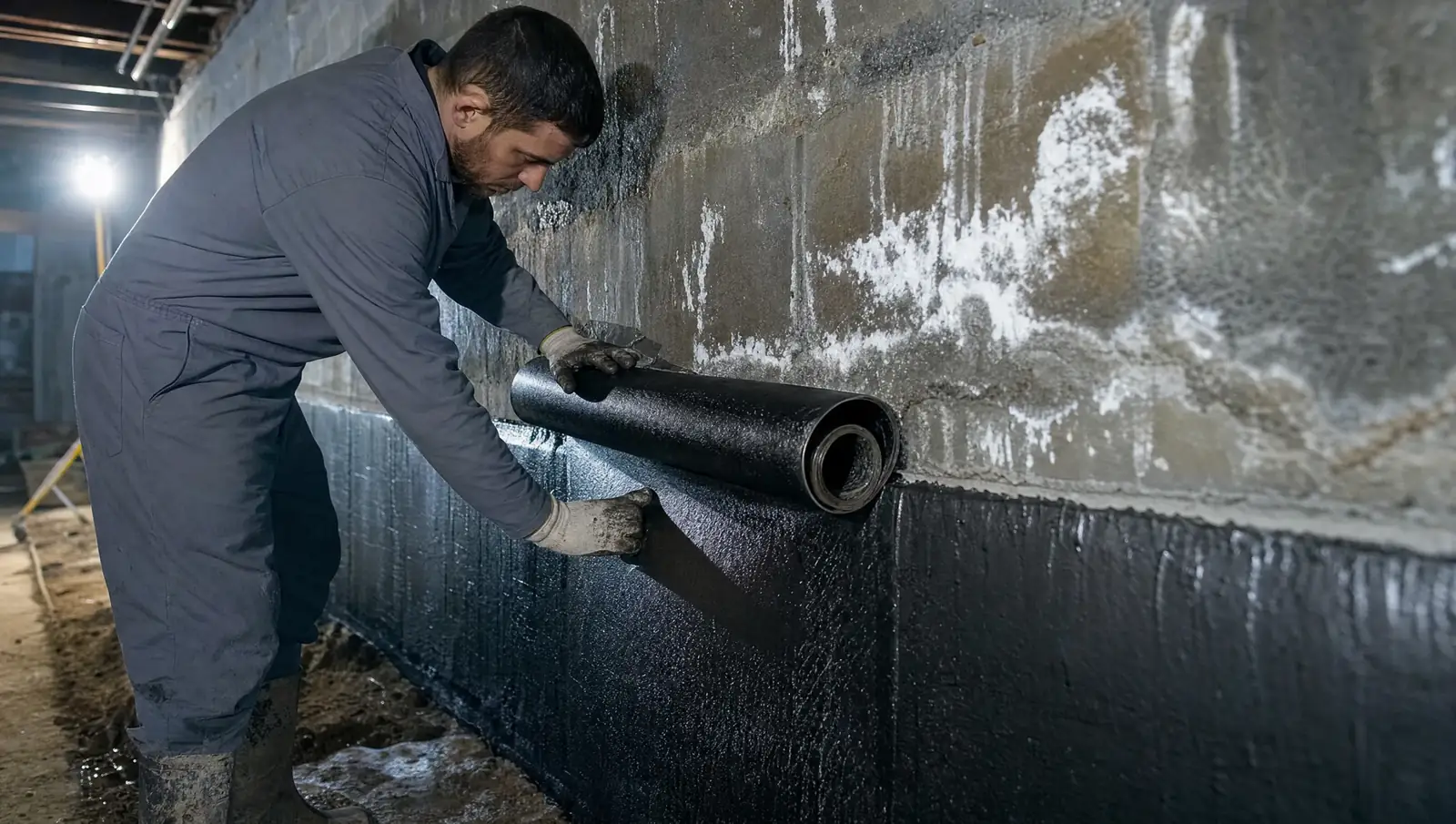
Crystalline waterproof membrane application on poured concrete foundation wall in a Westdale semi-detached home.
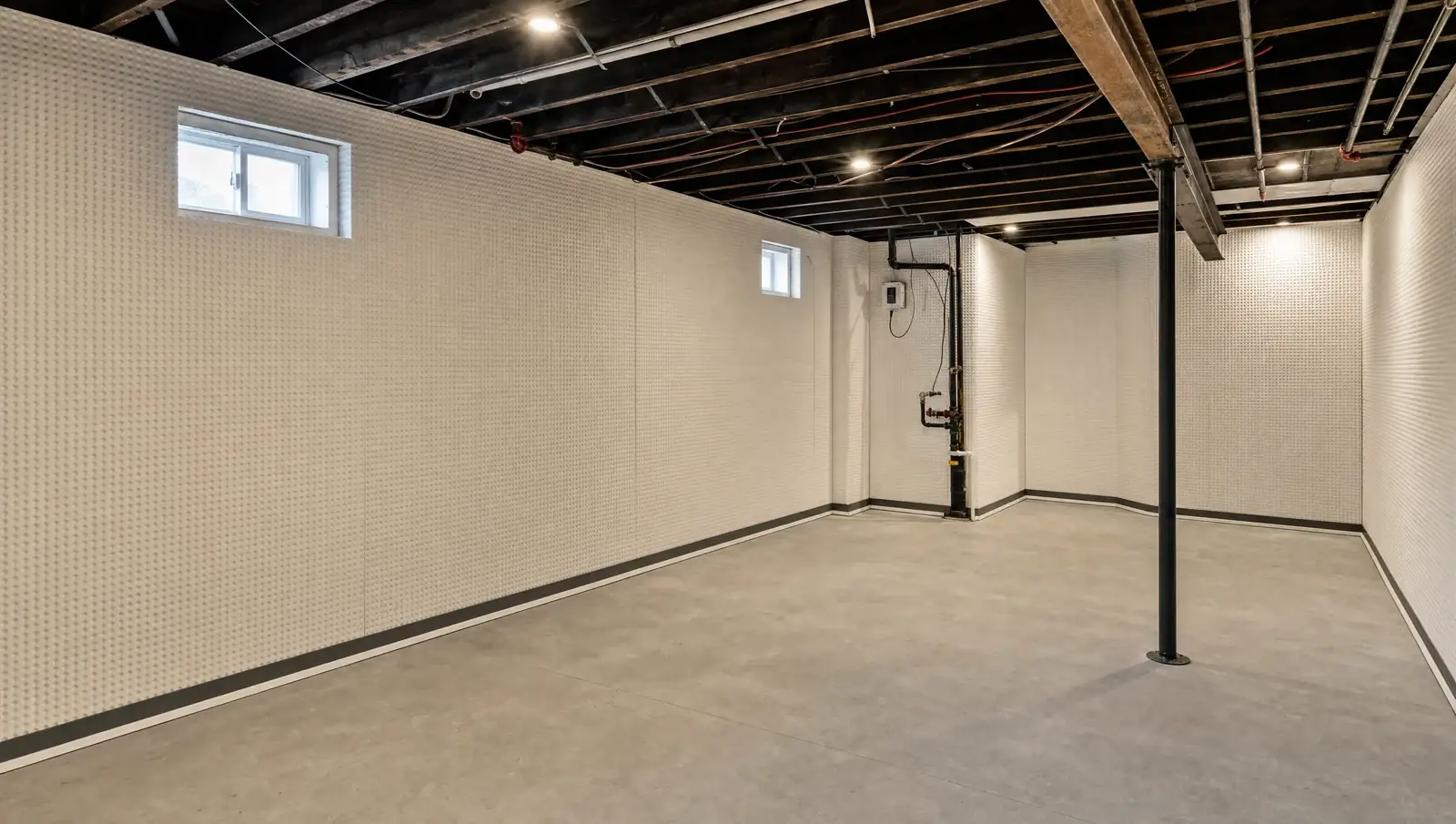
Neither method is universally better - both work well when matched to the right conditions, and we recommend based on your specific entry points and site access, not a default preference.
| Factor | Interior Waterproofing | Exterior Waterproofing |
|---|---|---|
| Disruption | Low - no exterior excavation | High - full excavation to footing |
| Water Control | Manages water after it enters wall | Stops water before it contacts wall |
| Year-Round | Can install any season | Weather and soil dependent |
| Landscaping | No impact | Full perimeter disruption |
| Cost | Lower for most homes | Higher due to excavation |
| Completeness | Effective system with proper sump | More comprehensive waterproofing |
| Foundation View | Foundation wall stays hidden | Wall condition visible during work |
WARNING SIGNS
These are the signs that tell you water management has already started to fail.
What basement waterproofing Hamilton actually costs depends on the method chosen, how much linear footage of wall is involved, site access, and how many separate problems are contributing. A single leaking crack is a completely different job than a full perimeter drainage system.
COMMON QUESTIONS
The questions that come up most from Hamilton homeowners dealing with a wet basement.
Several culprits show up again and again in Hamilton basements: hydrostatic pressure from clay-heavy soil pushing groundwater against the walls, weeping tile that's failed or was never installed, cracks in the foundation itself, grading that funnels rainwater toward the house instead of away from it, and window wells that don't drain properly. Between the region's rainfall and soil that holds onto water, waterproofing tends to be less of an option and more of an eventual necessity.
Exterior waterproofing means excavating down to the foundation and applying a membrane to the outside face, stopping water before it ever touches the wall. Interior waterproofing instead installs a drainage channel along the base of the interior wall, catching water before it reaches the floor and routing it to a sump pump that discharges it away from the house.
Cost swings widely by method and scope. A full perimeter interior drainage system typically runs $8,000 to $20,000. Exterior waterproofing with excavation runs higher, usually $15,000 to $40,000 depending on depth and access. Crack injection alone is the cheapest fix at $500 to $2,000 per crack. All of our quotes are written and fixed-price, provided after a free assessment.
Good materials and systems are built for 20 to 30 years of service. Interior drainage systems, which manage water rather than trying to block it outright, tend to outlast exterior membranes that can eventually crack or delaminate. Sump pumps need annual inspection and typically last 7 to 10 years before replacement. We back our drainage system installations with a 10-year warranty.
It comes down to where and how the water is entering, what access you have to the foundation, and your budget. Exterior waterproofing is more thorough but means excavation and disrupted landscaping; interior drainage is effective, less invasive, and can go in any time of year. We assess your specific entry points and recommend accordingly - sometimes the right answer is genuinely both methods combined.
Interior drainage installation generally doesn't require a City of Hamilton building permit. Exterior waterproofing can require one, depending on how deep the excavation goes next to the foundation. A sump pump tied into the sewer system needs a plumbing permit. We figure out exactly what applies during the assessment and manage whatever's required.
Our basement waterproofing Hamilton crews cover the city and the surrounding area, with no gaps in coverage.
Describe what you're seeing - where the water shows up, when it appears, what the wall looks like. We'll track down the source in person and hand you a fixed-price plan to fix it.