Not one shovel of exterior excavation needed. BaseWorks installs interior drainage systems that intercept water at the base of your foundation walls before it ever reaches the floor - a lasting fix with minimal disruption to the rest of your property.
THE SYSTEM
Interior waterproofing doesn't stop water from entering the wall in the first place - it catches that water at the base before it reaches the floor and routes it to a sump pump. That distinction matters, because water that's been moving through clay soil and foundation cracks for years won't just stop because a surface coating went on top of it. A properly built drainage system works with Hamilton's hydrostatic reality instead of fighting it.
What the system actually does is create a low-pressure zone right at the wall-floor joint, so water takes the path of least resistance into the drainage channel instead of spreading across your floor. Paired with a properly sized sump pump, it can handle groundwater volumes that would overwhelm a surface coating or crack injection on its own.
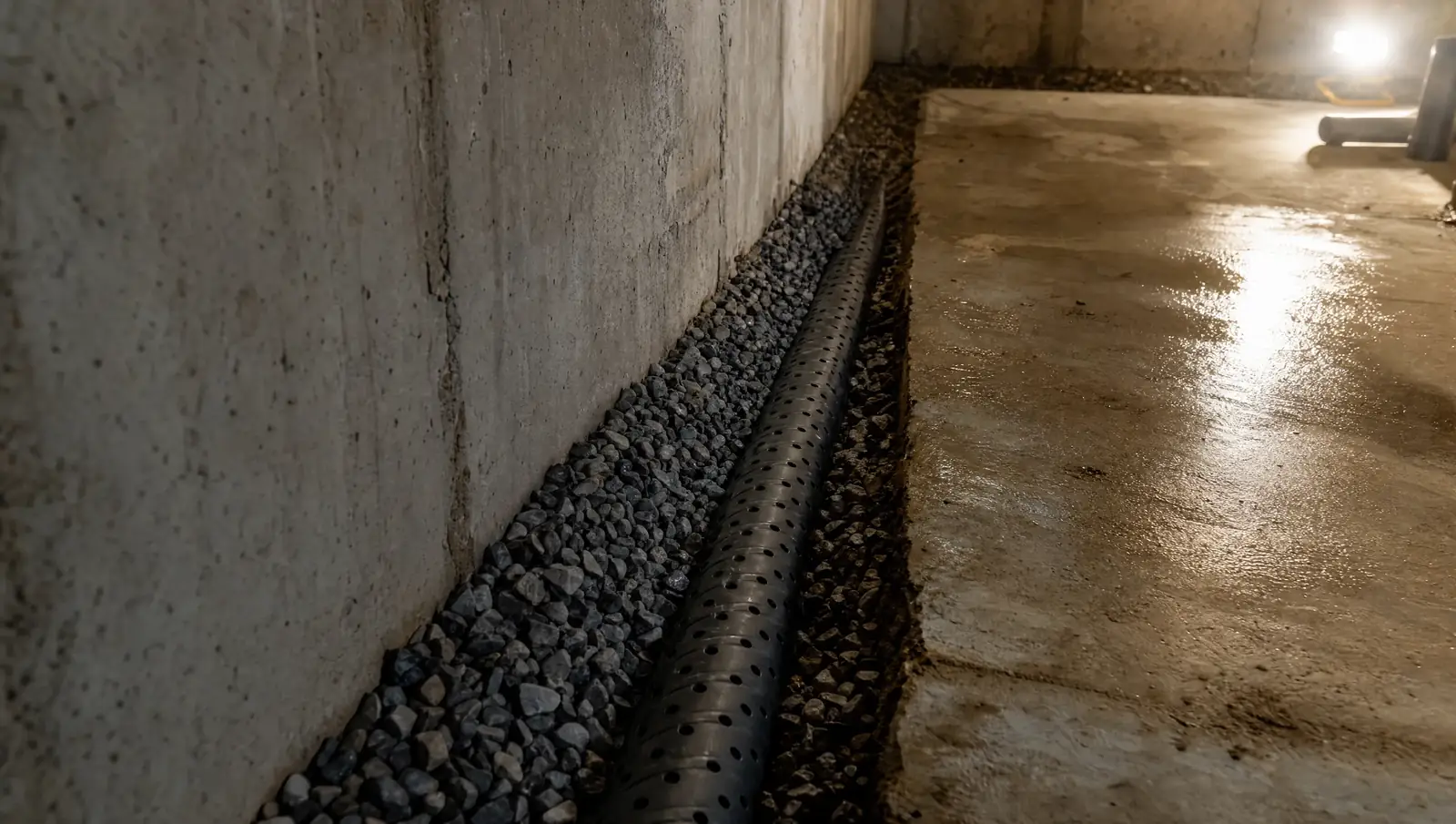
Interior drainage channel installation showing perforated pipe in gravel trench along the wall-floor joint before concrete restoration.
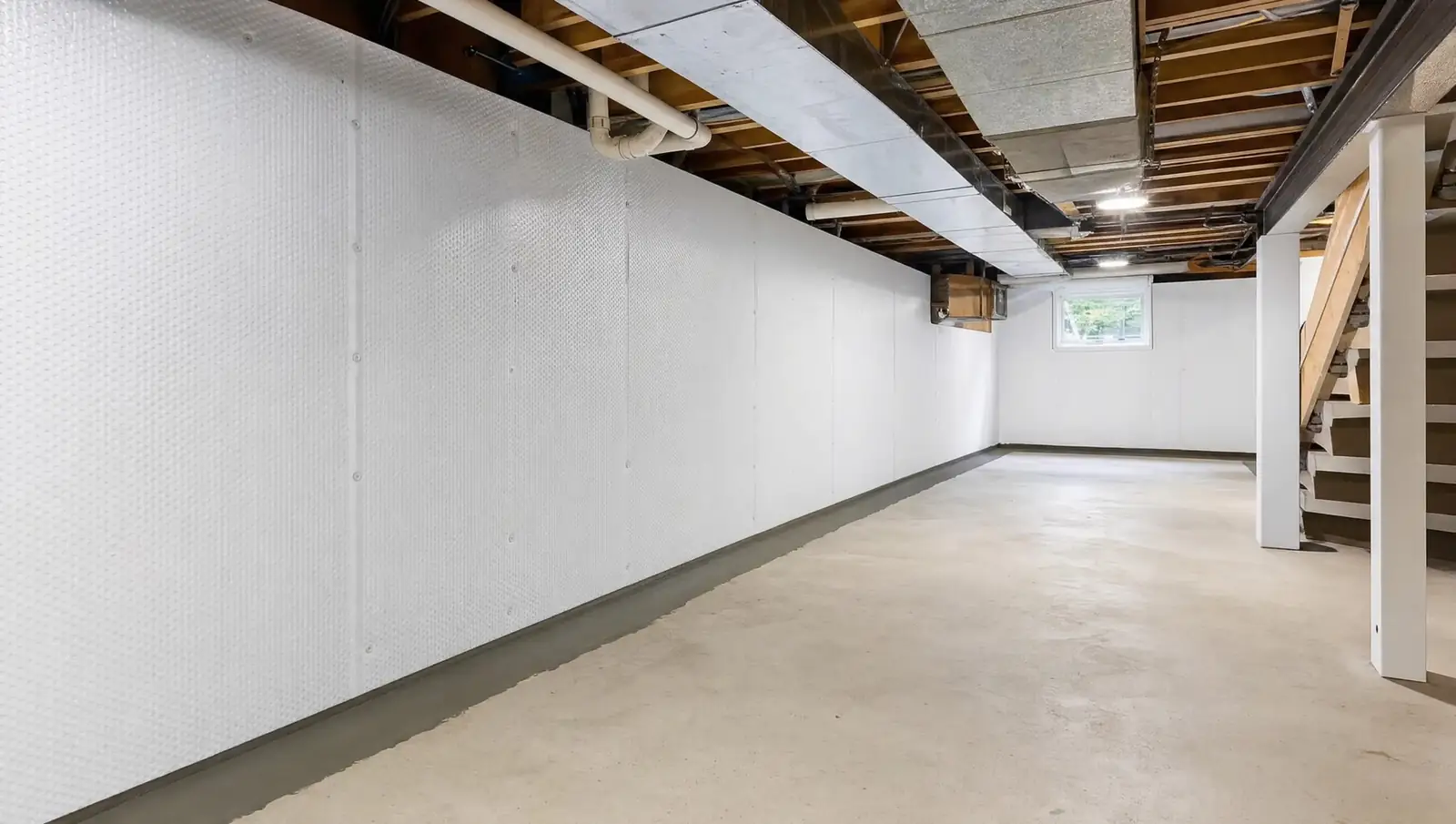
Interior waterproofing tends to be the right call whenever exterior access is tight, landscaping needs protecting, or budget is a real factor.
WHAT IT ADDRESSES
There's more than one way water gets in, and interior waterproofing is built to catch it from any of them - the assessment determines which sections of the perimeter actually need channel installation.
PRICING
COMMON QUESTIONS
What Hamilton homeowners ask most before committing to an interior drainage install.
A drainage channel goes in along the base of the foundation walls, all the way around the basement perimeter. We cut concrete along the wall-floor joint, set a perforated pipe or drainage board into gravel, and repour the concrete over top. Any water entering through the wall or that joint gets collected in the channel before it reaches the floor, then routed to a sump pit and pumped away from the house.
Very effective at managing water entering through the foundation wall or the wall-floor joint specifically. It won't stop water from entering the wall, but it collects it before it reaches your habitable floor surface. For most Hamilton homes where exterior excavation isn't practical or affordable, interior waterproofing paired with a proper sump pump is a genuinely long-term solution.
No - the entire installation happens from inside the basement. No exterior excavation means no disruption to landscaping, driveways, fences, or neighbouring properties, which makes this especially well-suited to Hamilton homes sitting on narrow lots with limited exterior access.
A standard basement perimeter typically takes 2 to 4 days. Concrete cutting kicks up real dust, so the work area gets sealed off with plastic sheeting and a negative air machine runs during the cut. Once the new concrete ledge is poured and cured - usually 24 to 48 hours after we finish - the basement is usable again.
A dehumidifier only pulls moisture out of the air - it does nothing about water actually entering through the wall or floor. Interior waterproofing physically catches and removes that water before it ever has a chance to evaporate into the air. A dehumidifier is a recurring cost that never touches the source; interior drainage fixes the source directly, and usually eliminates the need to run a dehumidifier at all.
A full perimeter installation typically runs $8,000 to $20,000, depending on basement size, foundation type, and how much concrete cutting and debris removal the job requires. A partial perimeter addressing one wet wall costs less. We provide a fixed-price written quote after assessing your specific water entry points in person.
Our interior waterproofing Hamilton crews cover the city and the surrounding area.
Interior waterproofing catches that water before it reaches your floor. In-person assessment, fixed-price quote, 2-to-4-day install - no excavation involved.