Not every crack in a foundation means the same thing. A hairline crack in a basement floor slab is background noise in most Hamilton homes. A horizontal crack across a block foundation wall is a different problem entirely. This guide breaks down the crack types that actually show up in Hamilton foundations, what causes them, and how to tell which ones need a call rather than a watchful eye.
Cosmetic vs. Structural: The Distinction That Matters
The real dividing line isn't crack width - it's direction and location. A hairline shrinkage crack in poured concrete is nothing like a horizontal crack in a block wall: one you can watch, the other needs real intervention. Every proper assessment starts by identifying which category a crack falls into before recommending anything, because fixing a symptom without addressing the cause just wastes money.
Cosmetic Cracks
Fine, vertical hairline cracks from normal concrete curing and shrinkage. Common in poured floor slabs and walls, and typically not a structural concern on their own.
Structural Cracks
Horizontal cracks, stair-step cracks in mortar joints, and any crack accompanied by bowing or leaning - these indicate active soil pressure or settlement and warrant a prompt assessment.
Why Hamilton Foundations Crack
Hamilton sits on deep lakebed clay that swells when wet and shrinks when dry, so foundation problems here are more the rule than the exception - that soil exerts variable lateral and vertical pressure on walls and footings all year round. Winter freeze-thaw cycles make it worse, widening cracks and speeding up settlement in foundations already under stress.
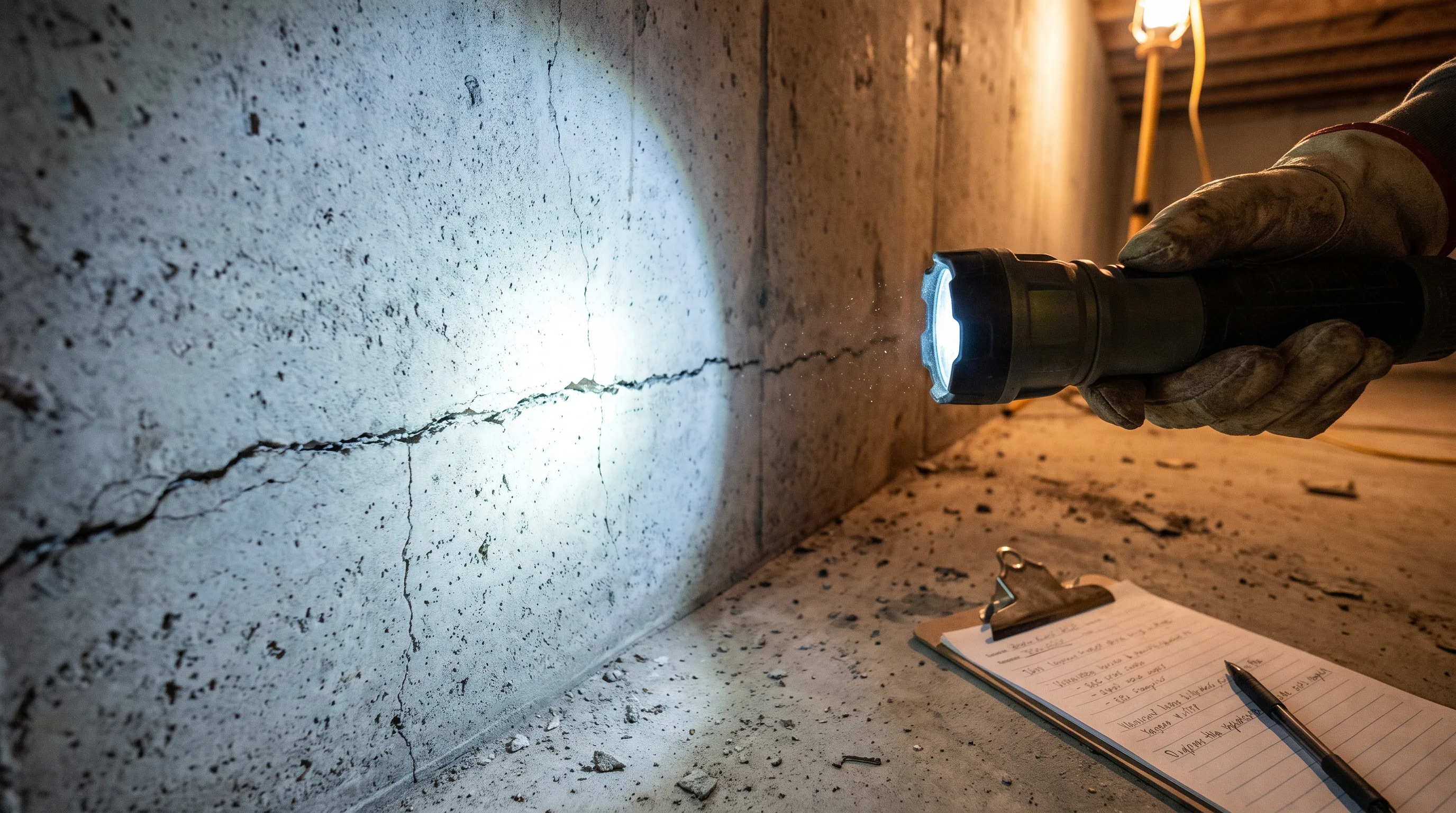
The Crack Types Worth Knowing
Horizontal cracks in a block or concrete wall mean lateral soil pressure has overcome the wall's bending resistance - structural, and worth an assessment right away. Stair-step cracking along mortar joints in brick or block foundations is textbook uneven settlement. Vertical hairline cracks are usually shrinkage-related and cosmetic. Cracks with visible bowing or leaning mean the wall has already moved and soil pressure has already beaten its resistance - it only gets worse from here without stabilization.
What Crack Repair Costs in Hamilton
A single crack injection (epoxy or polyurethane, for isolated cracks in poured concrete) runs $500 to $2,000, usually completed same-day. A bowing or leaning wall needing carbon fibre straps or steel anchors runs $3,000 to $8,000. If the crack is a symptom of active settlement, partial or full underpinning runs from $8,000 up to $90,000 depending on scope. BaseWorks doesn't quote foundation repair over the phone - every number follows an in-person structural assessment. Full details are on our foundation repair service page.
When to Call for an Assessment
Frequently Asked Questions
Usually not. A hairline shrinkage crack in a poured concrete floor slab is extremely common and rarely structural. The cracks worth an assessment are in foundation walls - especially horizontal or stair-step cracks - not fine cracks in a floor slab.
Hamilton sits on deep lakebed clay that swells when wet and shrinks when dry, applying variable pressure against foundation walls year-round. Winter freeze-thaw cycles compound that pressure, widening existing cracks and accelerating settlement faster than in cities without this soil profile.
A surface hardware-store sealant can mask a hairline shrinkage crack, but it does nothing for a horizontal or stair-step crack caused by lateral soil pressure - and it can hide a structural problem from view while it keeps getting worse underneath.