Most pre-1980 Hamilton homes are still running on original clay weeping tile that's already failed. BaseWorks replaces it with new perforated pipe set in crushed stone, restoring the perimeter drainage that's supposed to keep groundwater off your walls in the first place.
WHAT IT IS
Weeping tile is the perforated pipe sitting at the base of your foundation, right at footing level, and its whole job is to intercept groundwater before it can build hydrostatic pressure against the wall. When it's working properly, the water table never even reaches your foundation wall - it drains off through the pipe to the storm sewer or a sump instead.
Homes built roughly before 1975 to 1980 typically used clay tile - short clay cylinders laid end-to-end in gravel, with gaps between sections that let water in. Forty or fifty years on, those sections have usually collapsed, separated, or clogged with clay sediment and tree roots. Once that happens, the drainage function just disappears, and groundwater that used to be managed starts building up against the wall instead.
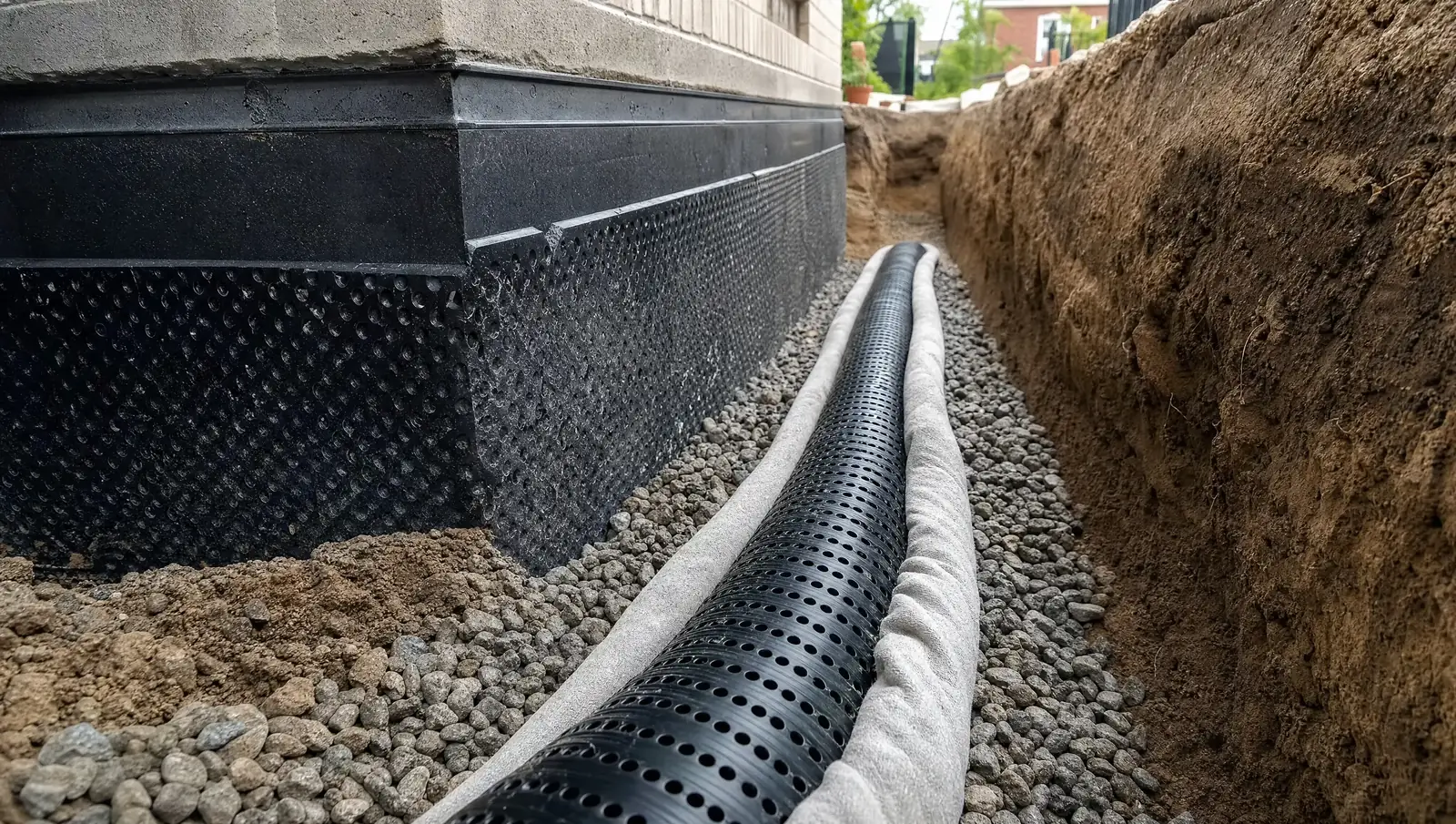
The fix is replacing that failed clay system with modern perforated PVC or corrugated HDPE pipe, wrapped in a filter fabric sock that lets water in while blocking the fine clay particles that clogged the original tile. What you end up with is a system built to perform for decades without the same clogging failure that took out the original.
New perforated drainage pipe set in crushed stone during weeping tile installation Hamilton. Orange pipe wrapped in filter fabric sock prevents fine clay particles from blocking the perforations.
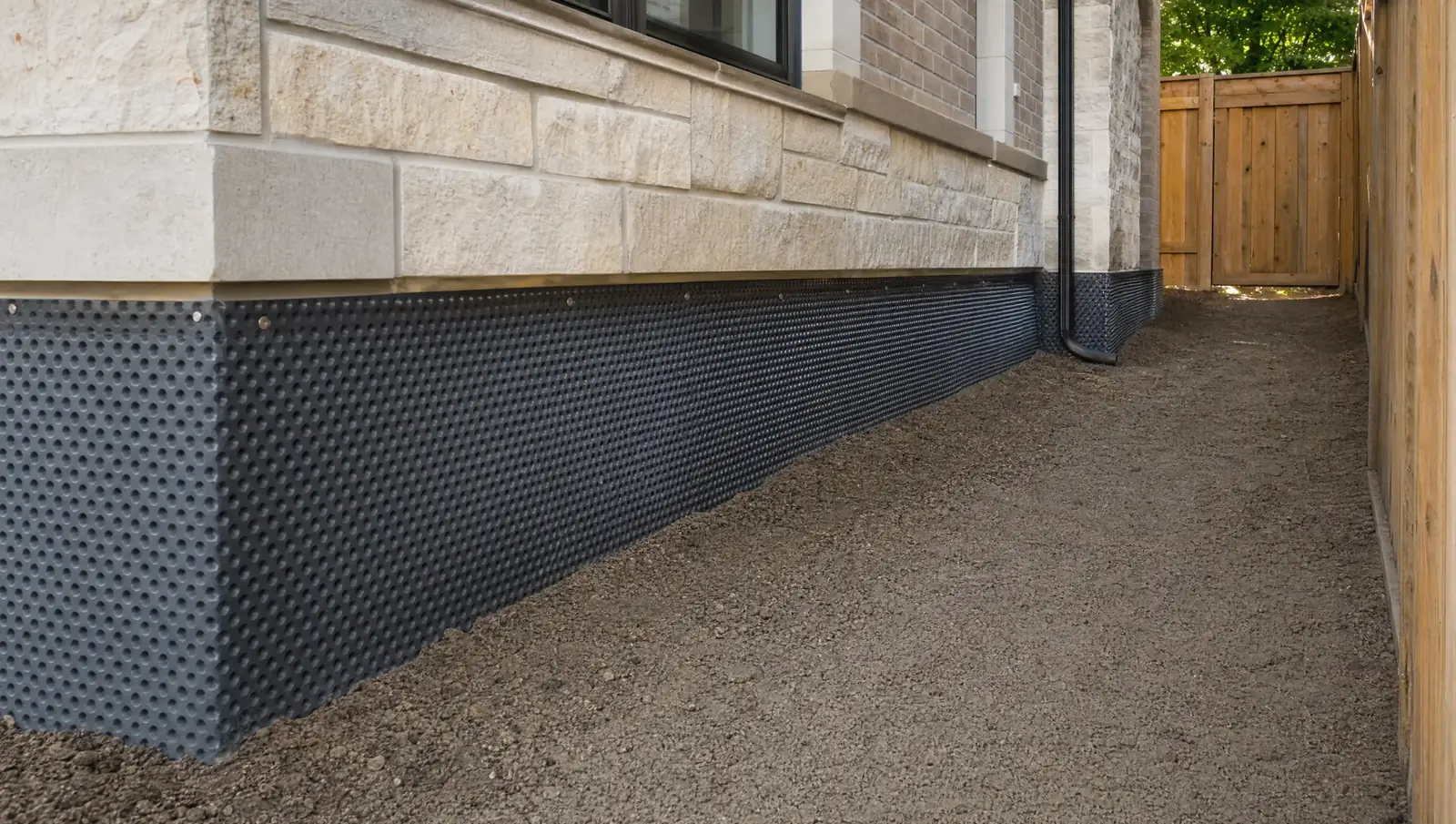
Any of these signs points to a perimeter drainage system that's stopped performing, and means it's time for an assessment.
PRICING
Pricing hinges mainly on whether the job involves exterior excavation or an interior drainage alternative instead. Either way, you get a fixed price after the assessment, not a range.
COMMON QUESTIONS
What Hamilton homeowners ask most about weeping tile and foundation drainage.
It's a perforated drainage pipe running around the foundation perimeter at footing level, collecting groundwater before it can build pressure against the wall. Original clay tile systems, common in homes built before 1980, tend to separate, collapse, and clog with tree roots and sediment over the decades. Once that happens, groundwater builds against the wall unchecked, leading to leaks and pressure damage.
Watch for basement walls that get wetter after heavy rain or spring melt, mineral deposits (efflorescence) on the foundation walls, damp patches at the base of exterior walls after rain, flooding during high-water-table periods, and cracks that keep appearing or widening. A camera inspection of accessible sections can confirm whether the system is still functioning or has already collapsed.
Exterior replacement always requires excavation, since the original pipe is buried outside the foundation at footing level. The alternative is an interior installation: a perforated drain channel along the interior wall-floor joint, collecting water that would otherwise enter through the wall and routing it to a sump pump. Functionally, it manages groundwater the same way, just without digging up the exterior.
Cost depends entirely on the approach. A full perimeter exterior replacement with excavation typically runs $15,000 to $35,000, usually done as part of a broader exterior waterproofing project. Interior drainage channel installation runs $8,000 to $20,000. We give you a fixed-price written quote after assessing the existing system's condition and figuring out the most practical approach for your home.
As part of a full exterior waterproofing project, expect 5 to 10 working days. Interior drainage channel installation is faster, usually 2 to 4 days, and being weather-independent it can happen any time of year. Exterior work needs cooperative ground conditions, so we schedule it spring through fall.
Discharge routes to one of three places: the storm sewer system, a sump pit with a pump, or daylight at a lower grade point on the property. It can never connect to the sanitary sewer under City of Hamilton bylaws. We determine the correct routing during the assessment, based on your property's grade and available connections.
Our weeping tile installation Hamilton crews cover the city and the surrounding area.
We assess your foundation drainage system in person and recommend exterior replacement or interior drainage, whichever actually fits your situation. Fixed-price quote follows the free assessment.