Your basement needs a sump pump if it has a history of water intrusion, sits in an area with a high water table, or already has a weeping tile system with nowhere to send the water it collects. A sump pump is the last working part of a drainage system, not the whole system on its own, and deciding whether you need one comes down to a short list of concrete signs rather than guesswork. This guide walks through those signs, the two main pump types, whether a battery backup is worth the extra cost in a Hamilton spring, and what installation runs.
If you already know you need one, our sump pump installation page covers scheduling and fixed pricing. If you are still deciding, keep reading.
How a Sump Pump Fits Into a Basement Waterproofing System
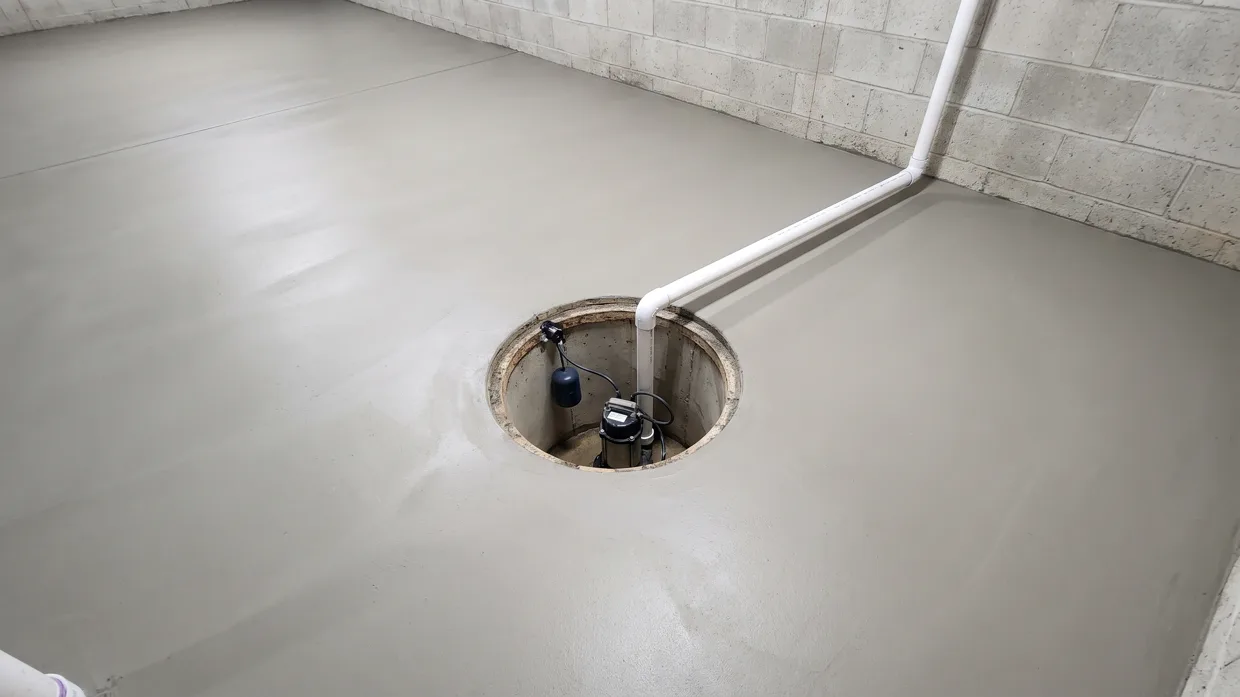
A sump pump is the mechanical exit point for water that your foundation's drainage system has already collected. Weeping tile, whether installed on the interior or exterior of the foundation wall, is designed to intercept groundwater before it reaches your basement floor and channel it toward a low point, called a sump pit. The pump sits in that pit and does exactly one job: when water rises to a set level, it switches on and pushes that water out through a discharge pipe, away from the foundation. Without a working pump, the weeping tile is still collecting water, it just has nowhere to go, which means it backs up and defeats the purpose of the whole system.
This is why a sump pump on its own is rarely the full answer to a wet basement, and also why it is rarely optional once weeping tile is in place. The two systems are designed to work together. For a full comparison of how interior and exterior drainage systems are built around this relationship, see our interior vs exterior waterproofing guide, which covers the system design in more depth than this post does.
A sump pump without weeping tile, or weeping tile without a pump, is half a system. If you are planning either on its own, confirm with a contractor whether the other half already exists or needs to be added at the same time.
Signs Your Basement Already Needs One
The clearest sign is water you have already seen: a damp or wet spot on the basement floor after heavy rain, a musty smell that returns no matter how often you clean, or visible efflorescence (the white chalky residue) on foundation walls. Any of these point to water reaching the inside of your foundation, and a sump pump paired with proper drainage is the standard fix.
Beyond visible water, a few property-level factors raise the odds you will need one even before a flood happens. Hamilton's older neighbourhoods, particularly areas with heavier clay soil, hold water longer after rain and snowmelt than sandier or well-draining lots, which puts more hydrostatic pressure against foundation walls. Homes situated at the bottom of a slope, or anywhere runoff from neighbouring properties naturally collects, face the same elevated risk. If your home already has a sump pit from a previous owner but no pump installed in it, or a sump pump you have never tested, treat that as an open question rather than an assumption that everything is fine.
Finally, our spring flooding prevention guide covers the seasonal pattern in more detail, but the short version is that Hamilton's spring thaw combines rapid snowmelt with saturated ground, which is when an undersized or missing sump pump gets exposed fastest.
Pedestal vs Submersible Pumps: Which Hamilton Basements Need
A submersible pump is the better fit for most Hamilton basements because it handles grit and debris better and runs quieter, which matters in finished or partially finished spaces. A pedestal pump is the better fit for a mechanical-only basement where upfront cost and easy visual inspection matter more than quiet operation. The table below breaks down the practical differences.
| Factor | Pedestal Pump | Submersible Pump |
|---|---|---|
| Motor location | Above the pit, exposed | Sealed inside the pit, underwater |
| Noise level | Noticeably louder | Quiet, muffled by the pit lid |
| Typical lifespan | 25 to 30 years (motor) | 7 to 10 years |
| Debris handling | Weaker, more prone to clogging | Stronger, handles grit and small solids |
| Upfront cost | Lower | Higher |
| Best fit | Mechanical-only basements, budget-focused jobs | Finished or partially finished basements |
Lifespan is not a simple "longer is better" comparison. A pedestal motor sitting above the pit tends to run longer because it never gets submerged, but it is also the louder, more exposed option day to day. A submersible pump trades some of that motor longevity for quieter, more reliable operation while buried in the pit where you will not see it fail early. For most homeowners finishing or partially finishing a basement, that tradeoff favours submersible.
Battery Backup: Is It Worth It in a Hamilton Spring Thaw
A battery backup is worth the added cost for most Hamilton homeowners because the spring thaw period, when flood risk peaks, is also when storm-related power outages are most common. A standard sump pump runs on household electricity, which means a power outage at the exact moment your basement is taking on the most water leaves the pump sitting idle. A battery backup unit switches over automatically when power drops, keeping the pump running through the outage rather than leaving your basement unprotected during the highest-risk window of the year.
The added cost for a battery backup system is a real line item, typically running several hundred dollars above the base pump installation, but it is worth weighing against the cost of a single flooded basement: damaged flooring, drywall, and stored belongings routinely run well into the thousands. For a basement with any finished space, stored valuables, or a history of flooding, the backup system pays for itself the first time it is actually needed.
What Installation Actually Costs and What Changes the Price
Sump pump installation cost depends primarily on whether a sump pit already exists, the pump type chosen, and whether a battery backup is added. A straightforward installation into an existing pit with a submersible pump runs toward the lower end of the range, while a job that requires cutting a new pit into the concrete floor, running a new discharge line to daylight or a storm connection, and adding battery backup sits at the higher end.
Three factors move the price the most: whether a pit needs to be cut into existing concrete floor, the discharge line routing (a short run to an exterior wall costs less than a long run requiring a new path through finished space), and the pump tier itself, since a heavier-duty submersible pump with a higher gallons-per-hour rating costs more than a basic model but handles larger water volumes without cycling as often. A free, fixed-price assessment accounts for all three before any number gets quoted, so you are working from one real figure rather than a range that could shift once work starts.
Quick Checklist Before You Call
Frequently Asked Questions
Not all, but any basement with a history of water intrusion, a high water table, or clay soil nearby benefits from one. A weeping tile system without a working pump has nowhere to send the water it collects.
A pedestal pump sits above the pit with the motor exposed, which is cheaper and easier to service. A submersible pump sits inside the pit, runs quieter, and handles debris better, which matters more in older Hamilton homes with established drainage.
If your basement floods during spring thaw, which is also when Hamilton sees the most power outages from storms, a battery backup keeps the pump running when it matters most.
Most sump pumps last 7 to 10 years with normal use. If yours is older than that or you cannot remember installing it, test it before spring rather than after a flood.
Yes. Installing a sump pump and pit is a contained job, usually completed in a day, and does not require the scale of excavation that underpinning or full exterior waterproofing involves.