Interior waterproofing in Hamilton typically runs $2,000 to $18,000, and the free assessment is what tells you exactly where your project lands - and confirms interior drainage is actually the right fit before you commit to anything. Here's what that visit covers, what drives the price, and how to book yours.
What the Free Assessment Actually Covers
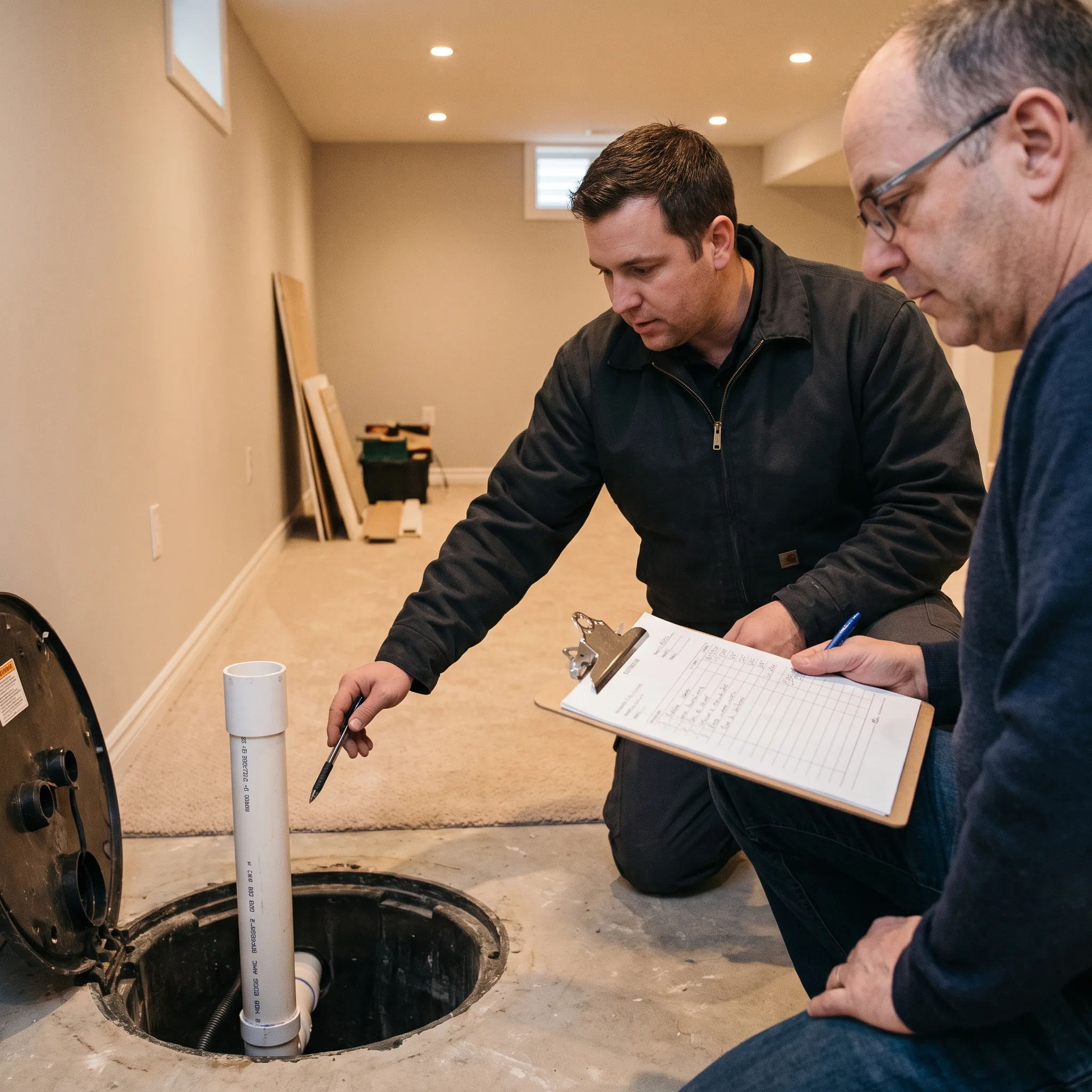
A project manager inspects your basement for the specific pattern of water entry - floor-wall joint seepage, isolated cracks, or general dampness - and checks whether an existing sump pit or drainage system can be reused or needs full replacement. That visit is where we confirm interior drainage is the right fit for your water pattern rather than exterior work, based on what's actually happening at your foundation. A written fixed-price proposal follows within 48 hours, at no charge and no obligation. See our interior waterproofing service page for the full method and pricing breakdown this estimate is based on.
Fixed-price means fixed. No ranges in your final contract, and nothing new on the invoice once it's signed - only pre-approved change orders if something unexpected turns up once work starts.
What Actually Moves the Price
Perimeter Length
A drain channel along one problem wall costs less than a full-perimeter system across three or four walls. Most quotes scale directly with linear footage of wall being drained.
Sump System Scope
Reusing an existing, functional sump pit keeps cost down. A new pit, pump, discharge line, and optional battery backup add to the total but are often necessary on a first-time install.
Why Book Before You Compare Quotes
A Real Example of How Pricing Breaks Down
To make the range concrete: a standalone sump pit and pump addition to an existing partial drainage system typically runs $2,000 to $6,000. A full-perimeter drain channel across three or four walls with a new sump pit, pump, and discharge line - like our Rosedale case study - usually lands between $8,000 and $14,000. A larger basement with a longer perimeter, difficult access, or a request for a battery backup system moves toward the upper end of the $18,000 range. Most Hamilton interior drainage projects land in the middle of that span, since a fully open, easily accessible basement perimeter is the most common scenario we quote.
Whether the basement is finished or unfinished also matters. An unfinished basement with exposed concrete floor and walls is the simplest and least expensive scenario, since there's no drywall or flooring to remove and replace around the work area. A finished basement adds cost for opening up and repairing drywall along the affected walls, which the assessment accounts for directly rather than as a surprise add-on later. A battery backup for the sump pump, if you choose to add one, typically adds $800 to $1,500 on top of the base system cost and is quoted as a separate line item so you can decide whether it's worth it for your specific situation.
What If the Assessment Finds More Than Expected?
Sometimes what looks like a straightforward interior drainage job turns out to need a bit more scope once the inspection gets underway - an existing sump pit that's undersized for the actual water volume, or a section of wall with a localized crack that needs injection alongside the drainage work rather than instead of it. When that happens, we explain exactly what we found and why, walk through the options at different price points, and give you a fixed-price quote for the scope that actually addresses your basement - not the scope you called about, and not an inflated worst-case number either. Occasionally the opposite happens too: a homeowner expecting to need a full-perimeter system learns during the assessment that a shorter run along one wall, or a standalone sump upgrade, solves the actual problem for considerably less than they'd budgeted.
How This Differs From a Generic Contractor Quote
Some contractors quote interior waterproofing as a flat rate per linear foot regardless of what's actually driving the water intrusion, without ever confirming whether the existing sump setup can be reused or needs full replacement. That approach can either overcharge for a simple sump upgrade bundled into a bigger sales pitch, or undersell a project that actually needs a battery backup and full perimeter coverage to solve the problem properly. BaseWorks prices after the assessment specifically so the number reflects your basement's real condition and your specific water pattern, not a generic average.
The same gap shows up in what's included on paper. A quote that doesn't specify whether a battery backup is part of the scope, what warranty applies to the drainage system, or whether drywall repair along a finished basement wall is included isn't actually comparable to one that spells all of that out - even when the headline number looks similar. Our written proposal lists everything covered so you're comparing complete quotes, not guessing at what might be missing from a cheaper one.
Why Fall Is a Good Time to Book
Booking an assessment before winter means any needed drainage work can be completed before spring melt and heavy spring rain put the most stress on your foundation - the same conditions that cause most seepage to first appear or worsen. Interior work isn't weather-dependent the way exterior excavation is, so a fall or even winter installation is entirely realistic, but booking the assessment now still means you're not waiting until the spring rush when scheduling gets tighter across every waterproofing contractor in the region and appointment availability starts stretching out by weeks rather than days.
Ready when you are: call (647) 692-2131 or request your free assessment online - most homeowners hear back within one business day, often with an appointment booked before the next rainfall.
Warranty and What Happens After Installation
Every interior drainage installation comes with a 10-year warranty covering the drain channel and connections, with the sump pump itself carrying its own manufacturer warranty separately - typically 3 to 5 years depending on the model installed, and longer on commercial-grade units where the added upfront cost buys extended coverage. We walk you through basic maintenance before we leave the job: how to test the pump's float switch, where the discharge line exits, and what a healthy system sounds and looks like versus one that needs attention. Most homeowners never need to think about the system again beyond an occasional test, but knowing what normal looks like means you'll catch a problem early if one ever comes up, rather than discovering it during the next major storm.
What to Have Ready Before the Assessment
Want to understand how a no-dig system actually works before you call? Our interior waterproofing guide walks through the full process and how it compares to exterior excavation.
Frequently Asked Questions
Yes. A project manager inspects your water entry points, checks the floor-wall joint and existing sump setup if any, and confirms whether interior drainage fits your situation. A written fixed-price proposal follows within 48 hours, at no cost and no obligation.
A full-perimeter interior drainage system with a sump pump typically runs $8,000 to $18,000. A partial run along one problem wall, or a standalone sump pit and pump, usually runs $2,000 to $6,000.
For a comparable scope, yes - interior drainage typically costs less than half of full exterior excavation. But the two methods solve different problems, so the real comparison is which one your specific water entry pattern actually needs, not which one costs less on paper.