Every Hamilton homeowner who wants more basement height eventually lands on the same fork in the road: full underpinning, or bench footings. Both get you a taller basement. They get there in different ways, at different costs, with different tradeoffs. Here's how to tell which one your house actually needs.
How Each Method Actually Works
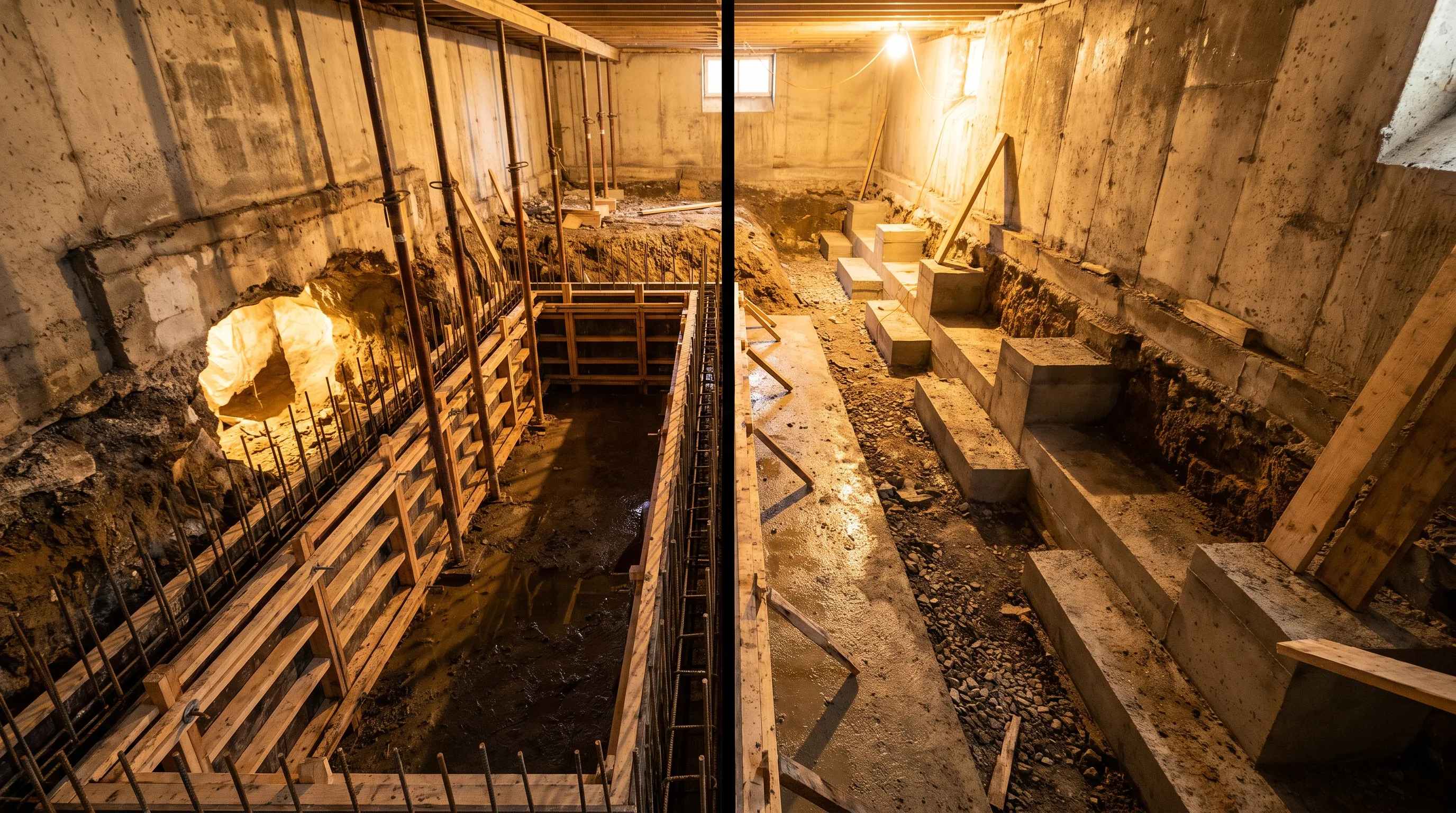
Full underpinning extends your foundation deeper into the ground - soil gets excavated below the existing footings, section by section around the full perimeter, and new reinforced concrete takes their place at the new, deeper depth. Bench footings pours new footings alongside the existing ones instead of underneath them, leaving a stepped concrete ledge around the perimeter at the original footing height.
Full Underpinning
2 to 3 feet of height gain, 100% of existing floor area retained, the strongest structural outcome, and full compatibility with legal suite requirements.
Bench Footings
1 to 2 feet of height gain, 20-35% lower cost, a shorter timeline - at the cost of a 12-18 inch perimeter ledge that reduces usable floor width.
Both go through identical engineering and permit rigour - engineer-stamped drawings, a City of Hamilton building permit, and mandatory inspections before every pour. The sequence differs; the standard doesn't.
When Full Underpinning Is Worth the Extra Cost
Underpinning is the clear choice when you're creating a legal secondary suite and every square foot of floor space matters for room dimension compliance, when your basement is narrow enough that a bench on both sides would meaningfully cut into usable width, when active foundation settlement needs structural depth correction rather than just a height fix, or when maximizing resale value is the priority - full underpinning typically adds more to Hamilton home values than bench footings.
When Bench Footings Makes More Sense
Bench footings is the smarter call when your basement is wide enough that losing 12 to 18 inches along the walls barely registers, when your budget can't stretch to full underpinning, when a legal suite isn't part of the plan, or when your timeline needs the faster sequence bench footings allows. It's a particularly strong fit for a basement finished as a rec room, where perimeter storage or built-ins can absorb the bench ledge entirely.
Cost Comparison
Full perimeter underpinning in Hamilton typically runs $45,000 to $90,000. Bench footings on a comparable home typically runs 20 to 35 percent less - usually landing between $30,000 and $65,000. Every BaseWorks proposal includes pricing for both methods side by side, so the decision comes down to your specific house and goals, not a sales pitch toward either option. Full details are on our basement underpinning service page.
Quick Decision Checklist
Frequently Asked Questions
No. Each method follows a different engineered sequence from the start, so the choice has to be locked in before permits are filed. This is exactly why the free assessment covers both options side by side before anything is signed.
In most Hamilton cases, yes - full underpinning typically adds more to home values because it retains complete floor area and suits a wider range of future uses, including legal suites. Bench footings can still be a smart financial choice when budget or timeline outweighs that resale premium.
No - both go through the identical City of Hamilton engineering and permit process, typically 4 to 8 weeks. The time savings with bench footings come from the physical construction phase, not the permitting stage.