Basement waterproofing in Hamilton costs anywhere from $500 for a single crack injection to $40,000 for full exterior excavation, and the honest answer to "what will mine cost" depends entirely on where and how water is actually entering your basement. This guide breaks down the real cost of every method, how interior and exterior waterproofing compare, and what actually determines whether your project lands at the low or high end of the range - plus the warning signs worth acting on before a small problem becomes an expensive one.
Why Hamilton Basements Get Water Problems
Several forces specific to Hamilton drive most of the calls we get. Clay-heavy soil across much of the city retains groundwater and exerts hydrostatic pressure against foundation walls year-round. Failed or absent weeping tile around older homes' foundations leaves nowhere for that water to drain. Cracks in poured concrete or block walls become entry points. Surface grading that slopes toward the house instead of away from it compounds all of the above. Hamilton's high annual precipitation combined with retentive clay soil makes waterproofing one of the most common structural investments in the city.
Older homes, particularly those built before modern weeping tile and drainage standards became routine, are disproportionately represented in the calls we get. A home built in the 1960s or earlier often has either no weeping tile at all or a clay-tile system that has partially collapsed or filled with silt over the decades - functionally the same as having none. Newer builds aren't immune either; even a home built within the last twenty years can develop water problems if the original grading has settled over time or a downspout extension was removed and never replaced.
Interior vs. Exterior Waterproofing
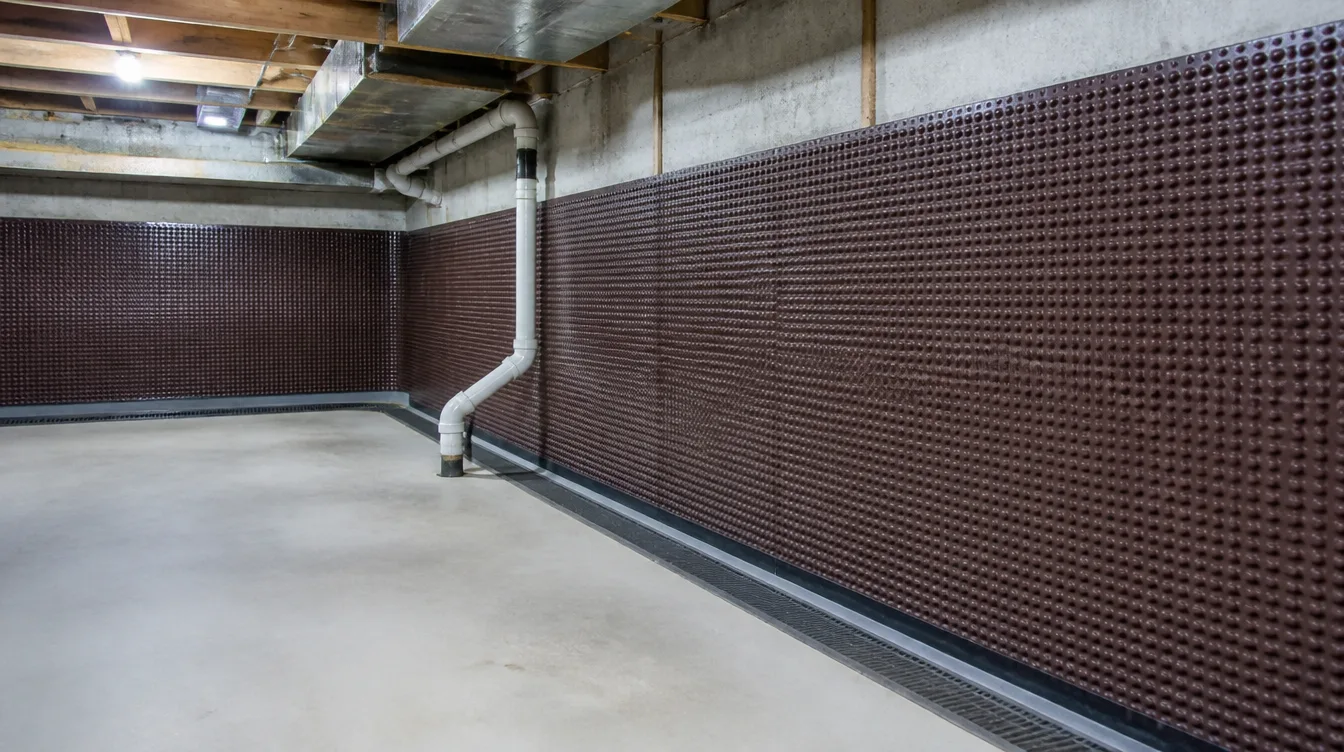
Interior Drainage System
Installs a drainage channel at the base of the interior foundation wall, collecting water before it reaches the floor and directing it to a sump pump. Less disruptive, can be installed year-round, and typically the more budget-friendly option.
Exterior Waterproofing
Applies a waterproof membrane directly to the outside face of the foundation after excavating, stopping water before it reaches the wall at all. More comprehensive, but requires excavation and landscaping disruption.
Exterior is the more complete fix since it stops water at the source; interior manages water that's already made it through. Full method comparisons live on our basement waterproofing service page.
The Full Cost Breakdown
$500 - $2,000: Crack Injection
Single crack epoxy or polyurethane injection sealing an active water entry point. Same-day completion for most cracks.
$8,000 - $20,000: Interior Drainage System
Full perimeter interior drain channel, sump pit, and sump pump. Cuts the concrete floor perimeter, installs pipe, backfills, and pours a new concrete ledge.
$15,000 - $40,000: Exterior Waterproofing
Excavation to footing, membrane application, drainage board, weeping tile, and backfill. Full perimeter pricing depends on foundation depth and access.
$2,000 - $6,000: Sump Pump + Weeping Tile
Sump pit, pump, and discharge line installation. Interior weeping tile connection or new exterior tile installation quoted separately based on scope.
Permits and Longevity
Interior drainage typically doesn't require a City of Hamilton building permit. Exterior waterproofing with significant excavation may need one depending on depth, and sump pump installation connected to a sewer system requires a plumbing permit - BaseWorks determines what applies at the assessment stage and manages the process. On longevity, good systems are built for 20 to 30 years. Interior drainage tends to outlast exterior membranes, which can eventually crack or delaminate over decades. Sump pumps need annual inspection and typically last 7 to 10 years before replacement. We back our drainage installations with a 10-year warranty.
A battery backup for the sump pump is worth budgeting for separately if your basement has ever flooded during a power outage - a standard sump pump is only as reliable as the electricity powering it, and Hamilton does see storm-related outages during the same heavy rain events that put the most stress on a drainage system. A battery backup unit typically adds $800 to $1,500 to an interior drainage installation and runs the pump for several hours during an outage, which is often exactly when it's needed most.
Warning Signs Worth Acting On
A few patterns show up consistently on Hamilton service calls, and each points toward a different scope of work. Efflorescence - the white, chalky mineral deposits that form where water has repeatedly moved through concrete - confirms a wall has been wet at some point even if it looks dry today, and usually means the crack or joint it's near needs attention before it worsens. A musty smell that persists even after running a dehumidifier for a few days points to moisture getting in faster than the dehumidifier can keep up with, which usually rules out condensation as the sole cause. Visible standing water after a heavy rain, especially if it appears at the same spot every time, confirms an active entry point rather than general humidity. And a sump pump that runs constantly, rather than cycling on and off during wet periods, can indicate the drainage system is undersized for the volume of water actually reaching the foundation.
None of these signs require an emergency same-day call in most cases, but none of them improve by waiting either - a small, contained water problem today is consistently cheaper to fix than the same problem after another wet season or two of unaddressed hydrostatic pressure and mineral buildup.
Common Mistakes That Cost Homeowners More Later
A handful of decisions come up repeatedly in a way that ends up costing Hamilton homeowners more than doing it right the first time. Painting over a damp wall with a "waterproof" basement paint treats the symptom, not the source - the paint can bubble and fail once water pressure builds behind it, and the underlying entry point never actually got addressed. Choosing the cheapest quote without confirming what's actually included is another common one: a bid that excludes permits, doesn't specify materials, or skips a sump pump backup battery can look attractive on paper and cost significantly more once those gaps get filled in after the fact. And delaying a known active leak specifically to save for a bigger, more comprehensive exterior fix sometimes backfires, since ongoing water intrusion can damage framing, flooring, and finishes in the meantime - costs that have nothing to do with the waterproofing method itself and everything to do with how long the water was actually getting in.
How to Choose the Right Method for Your House
See how this played out on a real project in our Landsdale case study, or go straight to what a free assessment covers if you're ready to get a number for your own basement.
Frequently Asked Questions
Interior drainage systems typically cost $8,000 to $20,000 for a full perimeter installation. Exterior waterproofing with excavation runs $15,000 to $40,000 depending on foundation depth and access. Crack injection alone runs $500 to $2,000 per crack.
Exterior waterproofing stops water at the source but requires excavation. Interior drainage manages water that gets through the wall, is less disruptive, and can be installed year-round. The right choice depends on where water is entering, foundation access, and budget.
Interior drainage typically doesn't require a City of Hamilton building permit. Exterior waterproofing with significant excavation may require one depending on depth. Sump pump installation connected to a sewer system requires a plumbing permit.
Good systems are built for 20 to 30 years. Interior drainage tends to outlast exterior membranes, which can eventually crack or delaminate. Sump pumps typically last 7 to 10 years before replacement and need annual inspection.