Not every foundation crack gets the same repair, and using the wrong material on the wrong crack can leave a homeowner with a fix that doesn't actually fix anything. Epoxy injection is one of two standard methods BaseWorks uses on Hamilton foundation cracks - the other being polyurethane foam - and which one applies depends entirely on what the crack is actually doing. This guide explains how epoxy injection works, when it's the right call, and what to expect from the process from first assessment to finished repair.
Reading the Crack First
Real crack repair starts with correctly reading the crack in front of you. Direction, width, location, and moisture all tell a different structural story. A vertical crack running top to bottom in poured concrete with no lateral offset is usually just a shrinkage crack from initial curing - common, low urgency, worth sealing to keep water fully out but not alarming. A horizontal crack in a block wall is an entirely different situation: that's bending stress from lateral soil pressure, and it needs a structural engineer's eyes on it before any injection method even gets specified.
Horizontal Cracks - High Priority
A structural concern driven by lateral soil pressure - needs a proper assessment, and injection may need wall reinforcement alongside it before closing up.
Diagonal Cracks - Medium Priority
Usually points to differential settlement. Direction and offset matter a lot here - an assessment determines whether injection alone is enough or not.
What we check before recommending anything: crack width at multiple points, lateral displacement, moisture, and the crack's history if you can tell us anything about how it's changed.
What Epoxy Injection Actually Does
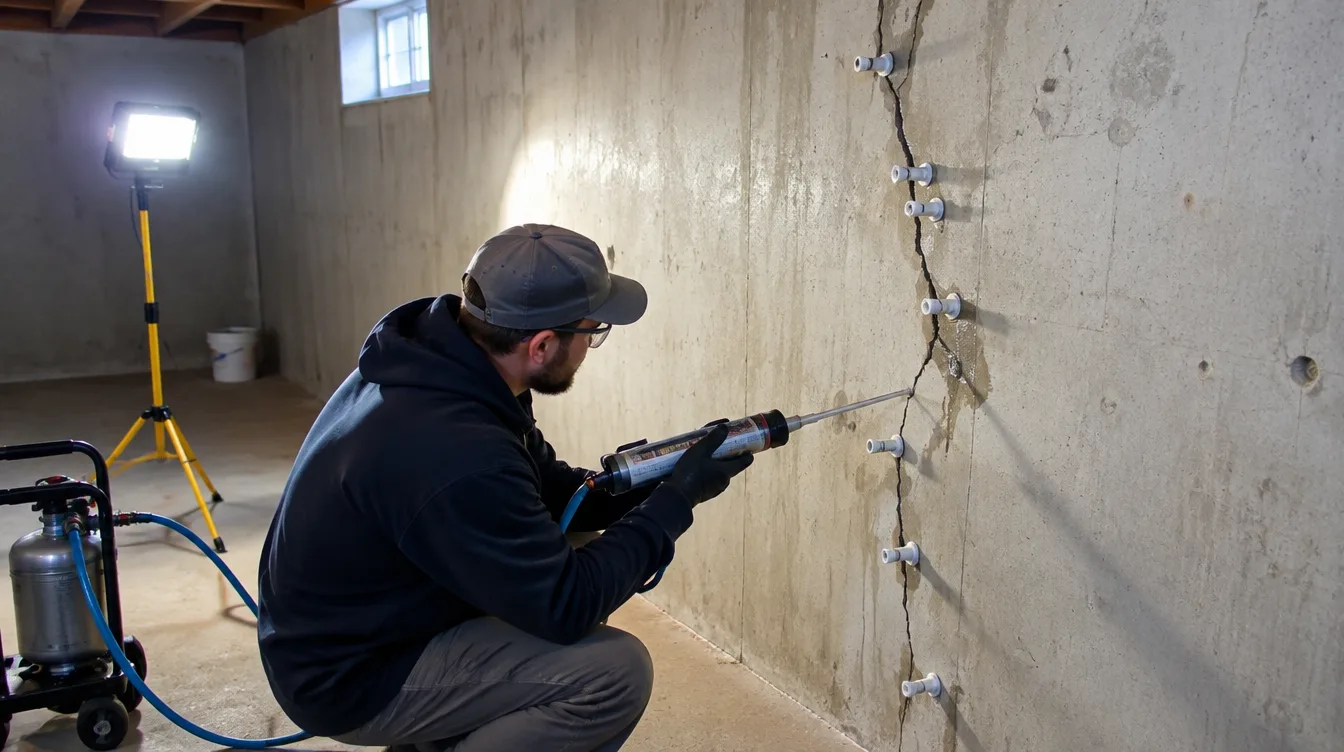
Epoxy injection restores structural bond across the crack - once cured, it bonds as strong as or stronger than the original concrete around it. That's the key distinction from polyurethane: epoxy is a structural repair, not just a water seal. It's used specifically on dry cracks in structural walls, where the goal is putting the wall's original strength back, not just stopping moisture from getting through. Once cured, the crack is effectively no longer a weak point in the wall - the epoxy bond becomes part of the concrete's load path again.
Epoxy vs. Polyurethane: Which Applies to Your Crack
The two materials solve different problems, and using the wrong one on the wrong crack is a real failure mode we see from other contractors. Epoxy is for dry, structural cracks where restoring bond strength is the goal. Polyurethane is for wet or actively leaking cracks, where creating a watertight seal is the priority over structural strength - it expands to fill the crack and stops water immediately, but it doesn't weld the concrete back together the way epoxy does. We select the material for your specific crack condition during the assessment, not before, and never guess based on a phone description alone.
The Injection Process, Step by Step
Once the material is chosen, the process itself follows a consistent sequence. Injection ports get installed roughly every 8 to 12 inches along the crack's length. Hydraulic cement or epoxy paste seals the crack face between the ports, containing injection pressure so the material actually gets forced deep into the crack instead of just surface-coating it. The chosen material - epoxy or polyurethane - is then injected at low pressure through each port in sequence, working from the bottom of the crack upward so gravity helps the material fill completely rather than pooling. Once complete, ports get capped and the repair is inspected once cured. Epoxy reaches full structural strength in 24 to 48 hours; polyurethane seals watertight essentially on contact.
Do You Need a Permit?
In most cases, no. Injection-based foundation crack repair is a material fix to an existing element and doesn't trigger a City of Hamilton building permit on its own. If the crack repair is part of a larger structural project involving underpinning or wall reinforcement, that broader project may require permits - we advise on what applies at the assessment stage, so there's never a surprise mid-project or a permit issue discovered after work has already started.
What Foundation Crack Repair Costs in Hamilton
$500 - $1,000: Small Single Crack
Hairline up to 3mm, under 24 inches long, interior access, dry - epoxy injection, same day, one single appointment.
$800 - $2,000: Active Leaking Crack
A wet or actively leaking crack needing polyurethane foam injection - through-wall cracks sometimes need exterior injection as well.
$1,500 - $4,000: Multiple Cracks
When two or more cracks in the same wall need injection, a single mobilization brings the per-crack cost down.
Cracks that point to lateral movement or bowing sometimes need carbon fibre reinforcement alongside the injection, running $3,000 to $8,000 - a structural assessment is always required before that combined scope gets quoted or approved. See our foundation crack repair service page for the full pricing and method breakdown.
Why DIY Epoxy Kits Usually Fall Short
Hardware store epoxy crack kits exist, and for a very narrow hairline shrinkage crack, they can hold up reasonably well. The problem is depth and pressure. Consumer kits inject at low volume from a caulk-gun style applicator, which rarely achieves the pressure needed to force material through the full thickness of a foundation wall - often 8 inches or more of poured concrete. The result looks sealed at the surface while the crack's interior remains open, which means it's still a path for water and still a structural gap, just a hidden one that's harder to diagnose later. Professional injection uses ports set at depth along the full crack length specifically to avoid this problem.
Signs Your Crack Needs a Professional Look Now
A handful of signs point toward calling sooner rather than monitoring further. Water or dampness appearing at the crack after rain means hydrostatic pressure is actively pushing through it. White chalky efflorescence deposits confirm water has moved through the crack repeatedly, even if it looks completely dry today. Any measurable growth - compare against an old photo or a pencil mark - means the crack is still active rather than settled. And any horizontal orientation or visible offset between the two sides of the crack should go straight to an assessment rather than a wait-and-see approach, since those patterns indicate ongoing structural movement rather than old, stable shrinkage.
Can a Repaired Crack Come Back?
See how this plays out on a real Hamilton project in our Chedoke case study, or go straight to what a free assessment covers if you're ready to get a number for your own crack.
Frequently Asked Questions
Repair is warranted for horizontal cracks (always a structural concern), anything wider than 3mm, actively leaking cracks, stair-step cracking in block or brick walls, and any crack that's measurably grown. Hairline shrinkage cracks under 1mm in poured concrete are generally low priority and fine to monitor.
Epoxy restores structural bond across the crack, curing as strong as or stronger than the original concrete - the right choice for dry cracks in structural walls. Polyurethane expands to fill and seal wet or actively leaking cracks, creating a watertight barrier without restoring structural strength.
Most appointments run 2 to 6 hours per crack, depending on length, width, and access, with injection ports going in roughly every 8 to 12 inches. Epoxy reaches full structural strength in 24 to 48 hours.
In most cases, no - injection repair is a material fix to an existing element and doesn't trigger a City of Hamilton building permit. If it's part of a larger structural project, that broader project may require one.
Injection pricing typically runs $500 to $2,000 per crack depending on length and access, with multi-crack and reinforcement scopes running higher. BaseWorks provides written fixed-price quotes after a free assessment.