Crack injection in Hamilton typically runs $500 to $2,000 per crack, and the free assessment is what tells you whether your specific crack needs epoxy, polyurethane, or something beyond injection entirely - not a guess made over the phone. Here's what that visit covers, what drives the price, and how to book yours.
What the Free Assessment Actually Covers
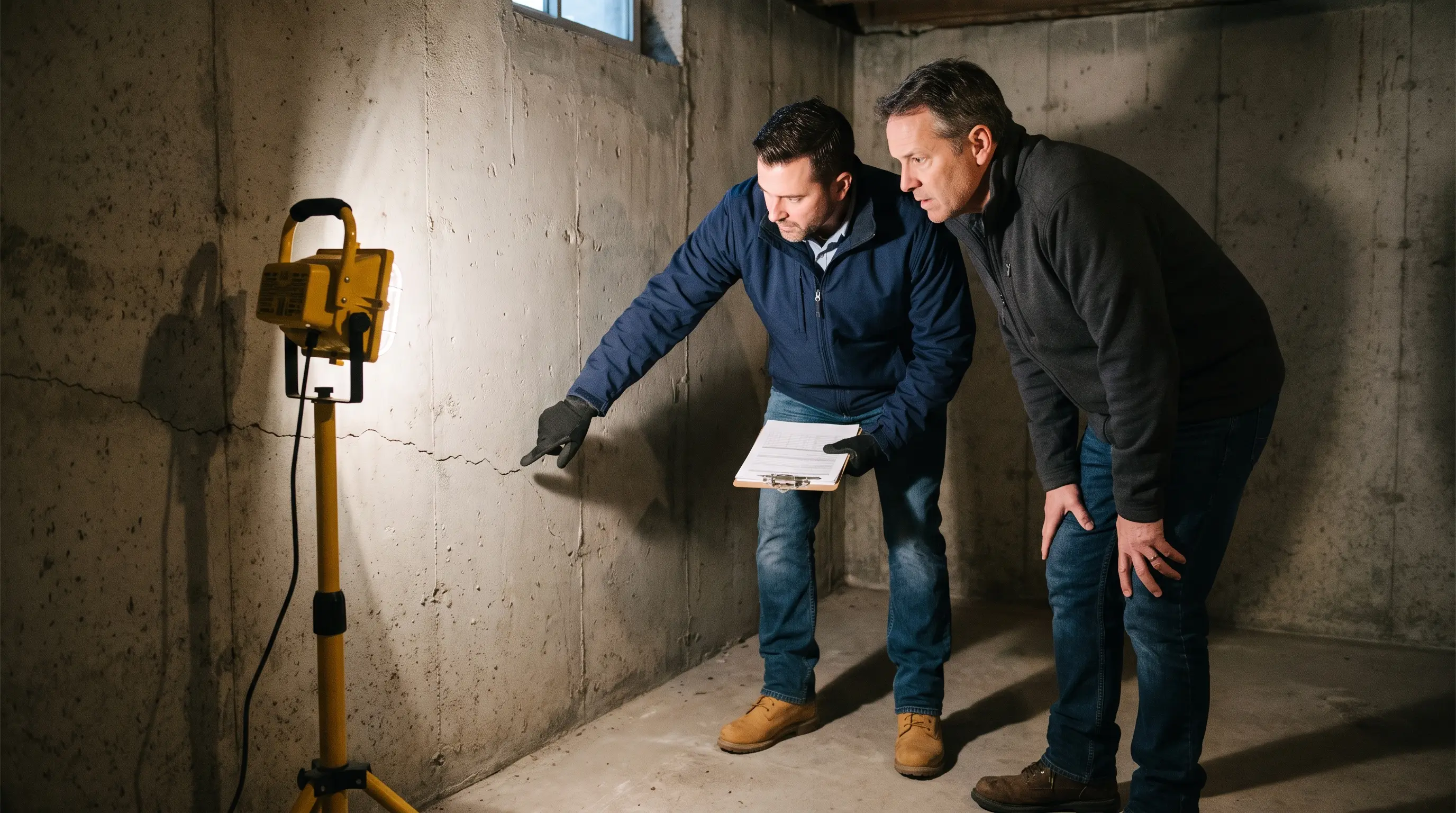
A project manager inspects your crack directly - checking whether it's dry or actively letting water through, measuring its width, and looking for any offset or pattern that might indicate broader structural movement rather than an isolated, stable crack. That visit is where the epoxy-versus-polyurethane decision gets made, based on your crack's actual condition rather than a default material. We also walk the rest of the accessible foundation while we're there, since a second, unreported crack sometimes turns up during that broader look, as it did in our Eastmount case study below. A written fixed-price proposal follows within 48 hours, at no charge and no obligation. See our foundation repair service page for the full method and pricing breakdown this estimate is based on.
Fixed-price means fixed. No ranges in your final contract, and nothing new on the invoice once it's signed - only pre-approved change orders if the assessment findings change once work is underway.
What Actually Moves the Price
Crack Length & Accessibility
A short, easily accessible crack costs less to inject than a longer crack, or one behind finished walls or storage that needs to be cleared first.
Number of Cracks & Materials Needed
Multiple cracks, or a single project needing both epoxy and polyurethane at different locations, scale the total cost with the added scope.
Why Book Before You Compare Quotes
What If the Assessment Finds More Than Expected?
Sometimes a homeowner calls about one visible crack and the assessment finds a second one nearby, or discovers the "simple crack" is actually part of a broader pattern of wall movement that needs more than injection alone - like our Eastmount case study above, where a routine call turned up a second, previously unreported crack needing a different material entirely. Either way, we explain exactly what we found and why, walk through the options at different price points, and give you a fixed-price quote for the scope your foundation actually needs, not the scope you called about by default.
A Real Example of How Pricing Breaks Down
To make the range concrete: a single, short, easily accessible crack - dry or damp, either material - typically runs $500 to $900 for a same-day injection. A longer crack, or one requiring furniture or shelving to be moved for access, usually lands between $900 and $1,500. A project needing two different cracks addressed with different materials, in one visit - like our Eastmount case study above - typically runs $1,200 to $2,000 combined, reflecting the added scope of two separate repairs rather than one.
Most single-crack injections in Hamilton fall in the lower half of the overall range, since a straightforward, accessible, isolated crack is the most common scenario our project managers actually quote. Multiple cracks or difficult access are what push a specific quote toward the higher end - and neither of those factors is knowable from a phone description alone, which is exactly why the on-site visit matters for pricing accuracy as much as it does for the diagnosis itself.
How This Differs From a Generic Crack Repair Quote
Some contractors quote crack injection as a flat rate without ever confirming whether the crack is actually dry or damp, defaulting to whichever material they happen to keep in stock rather than the one the crack's condition calls for. That approach risks a compromised repair - epoxy applied to a damp crack that never fully bonds, or polyurethane used on a dry crack where restoring structural strength was actually the priority. BaseWorks prices and specifies material after a real on-site assessment specifically so the repair matches the crack's actual condition, not a generic default.
The same gap shows up in what's actually inspected. A quote given over the phone or from photos alone can't confirm whether a second, unreported crack exists elsewhere on the same wall - exactly the kind of gap our full-perimeter walk-through assessment is built to catch. Our written proposal reflects what was actually found during an in-person inspection, not an estimate extrapolated from a description alone.
Ready when you are: call (647) 692-2131 or request your free assessment online - most homeowners hear back within one business day.
Warranty and What Happens After the Injection
Every BaseWorks crack injection comes with a warranty covering the repair, and the project manager who performed the assessment documents exactly which material was used and why, on file for any future reference. Before leaving the site, we walk you through what to expect: the ground-flush injection ports will be barely visible once fully cured, and we explain what a properly sealed crack looks and feels like versus one that would warrant a follow-up call. Most crack injections, done correctly and matched to the right material, are genuinely a one-time fix - the whole point of getting the diagnosis right upfront is that you shouldn't need to think about that specific crack again.
Why Waiting Rarely Saves Money on a Crack Repair
A dry, stable crack today doesn't necessarily stay that way indefinitely. Ongoing minor settlement, seasonal freeze-thaw cycles, and simple concrete aging can widen a hairline crack over time, and a crack that starts dry sometimes eventually becomes a water entry point once it widens enough. Addressing a crack while it's still small and isolated is consistently cheaper and simpler than waiting until it's grown, started leaking, or been joined by a second crack nearby - the injection itself doesn't get meaningfully cheaper by waiting, and the odds of the problem staying exactly the same size only go down the longer it sits unaddressed.
There's also a documentation benefit to addressing a crack sooner rather than later. A crack repaired and warrantied while it's still a minor, isolated issue creates a clean record for any future home sale or insurance question. A crack that's been left to develop for years, by contrast, sometimes raises more questions during a sale - about how long it's been there, whether it's actively worsening, and whether it's been professionally assessed at all - questions that simply don't come up when the repair has already been documented and closed out.
What to Have Ready Before the Assessment
Want to understand the difference between the two materials before you call? Our epoxy vs polyurethane guide breaks down how each one works and when each applies.
Frequently Asked Questions
Yes. A project manager inspects your crack's condition - dry or damp, width, location - and the surrounding wall for signs of broader movement. A written fixed-price proposal follows within 48 hours, at no cost and no obligation.
Epoxy and polyurethane injection are both typically priced per crack, in the $500 to $2,000 range depending on crack length, accessibility, and whether both materials are needed for a single repair.
Yes - that's the central question the assessment answers. We check whether the crack is dry or actively letting water through, along with its width and the surrounding wall's condition, before recommending epoxy, polyurethane, or a broader repair if the assessment finds signs of structural movement.