Epoxy and polyurethane are the two materials used to inject and seal a foundation crack, and they solve genuinely different problems - using the wrong one is one of the most common mistakes in DIY and even some professional crack repair. This guide explains how each material actually works, when a licensed contractor chooses one over the other, and why the distinction matters more than most homeowners realize.
How Each Material Actually Works
Epoxy injection uses a two-part resin that, once mixed and injected into a crack, cures into a rigid, high-strength bond - structurally, it essentially welds the two sides of the crack back together as a single piece of concrete. It doesn't react with water the way polyurethane does, so it needs a relatively dry crack to bond properly and cure to its full strength. Polyurethane injection works differently: the material reacts with moisture and expands as it cures, filling the crack and any surrounding voids with a flexible, water-resistant foam-like seal. It doesn't restore structural strength the way epoxy does, but it seals water out even in a crack that's actively seeping, and its flexibility lets it accommodate minor seasonal movement without cracking again at the same seam.
The core distinction: epoxy repairs structural strength on a dry, stable crack. Polyurethane stops water on an active or damp crack, with flexibility built in. Choosing between them is a diagnosis question, not a preference.
Epoxy vs. Polyurethane at a Glance
Epoxy Injection
Rigid, high-strength bond that restores structural integrity to the crack. Best on dry, non-moving cracks. Doesn't flex, so it's not the right choice where minor ongoing movement is expected.
Polyurethane Injection
Flexible, water-reactive seal that expands to fill voids and stop active leaks. Not structural. The right choice for damp or actively leaking cracks, or where some flex is needed.
Full detail on foundation repair methods and when each applies is on our foundation repair service page.
How a Contractor Actually Decides Between the Two
The decision starts with two questions during the assessment: is the crack actively letting water through right now, and is the wall itself structurally stable or showing signs of ongoing movement. A dry, stable, hairline crack in an otherwise sound wall is the textbook epoxy case - the goal is restoring strength, and there's no active water to work against the bond. A crack that's damp, actively seeping, or located somewhere it's clearly been wet repeatedly is the textbook polyurethane case - stopping the water is the immediate priority, and epoxy's need for a dry surface makes it a poor fit until the leak itself is addressed. Some situations call for both in sequence: polyurethane to stop active water first, followed by epoxy once the crack has dried out, if structural bonding is still needed at that location.
Crack width and location also factor in. Very fine hairline cracks sometimes require a lower-viscosity epoxy formulation to fully penetrate the crack's depth, while wider cracks or ones with visible voids behind the wall face may need polyurethane's expanding fill properties regardless of moisture, simply to fully seal the void. Cracks near window wells, at the base of a wall close to grade, or anywhere prone to repeated seasonal wetting are more often polyurethane candidates by default, even during a dry inspection visit, since our project managers factor in how the crack is likely to behave across a full year, not just its condition on the day of the assessment.
Temperature at the time of injection matters too, particularly for epoxy. Cold winter conditions can slow epoxy's cure time significantly or, in extreme cases, prevent it from reaching full strength, which is why late-fall and winter crack repairs in Hamilton sometimes favour polyurethane by default regardless of the crack's moisture condition - a detail worth asking about if you're booking a repair heading into colder months.
What Crack Injection Costs in Hamilton
Both epoxy and polyurethane injection are typically priced per crack, in the $500 to $2,000 range depending on crack length, accessibility, and whether one or both materials are needed for a specific repair. Most single-crack injections are completed same-day. See our foundation repair service page for the full pricing breakdown across every repair method, from injection through full underpinning.
What Injection Actually Looks Like on Site
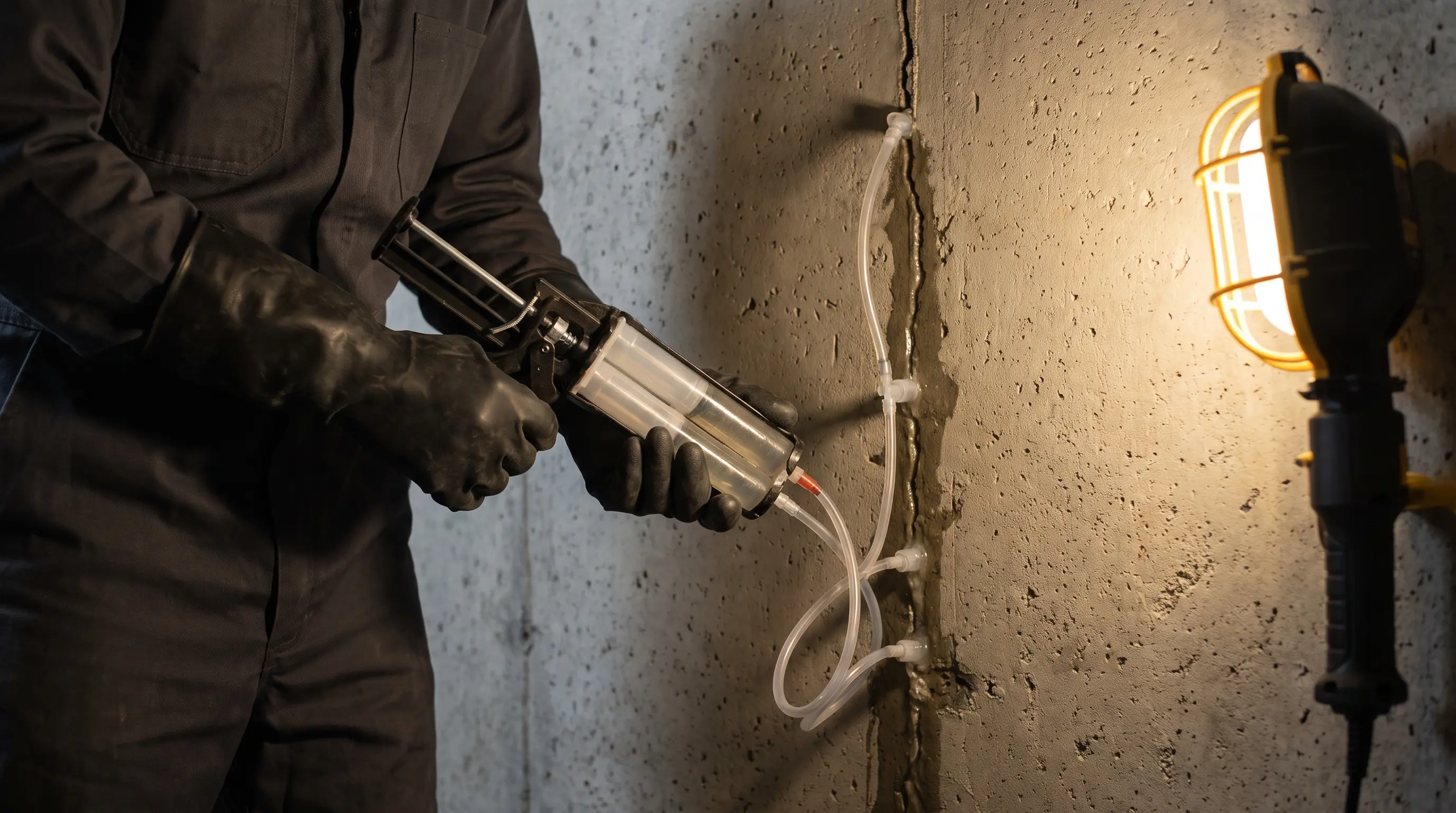
Both materials are installed through a similar process, though the details differ. Small injection ports are set along the full length of the crack, spaced a few inches apart, and sealed to the wall surface with a surface paste. The injection material is then pumped through each port in sequence, starting at the bottom of the crack and working upward, allowing the material to fill the crack's full depth rather than just the visible surface gap - a crack that's only sealed at the face and not filled through the wall's thickness is a common shortcut that fails to actually solve the problem. Once the injection is complete and cured, the surface ports and paste are ground flush and the wall is left with a thin, mostly invisible seam where the crack used to be.
Cure time differs between the two materials. Polyurethane typically reaches its working seal within minutes to hours, since the expanding reaction with water happens quickly. Epoxy takes longer to reach full cured strength - often 24 to 72 hours depending on temperature and the specific formulation - though it's generally handled and left undisturbed well before that point since the injection itself is a one-time process.
Common Mistakes That Lead to Repeat Cracks
A handful of mistakes come up repeatedly in cracks we're asked to fix a second time after a previous, often DIY, injection attempt using a hardware-store kit not designed for the specific crack condition it was applied to. Using epoxy on an actively wet crack is the most common - the moisture prevents proper bonding, and the crack reopens or continues leaking despite the repair. Surface-only sealing, where injection ports aren't actually driven deep enough or spaced closely enough to fill the crack's full depth, is another - it looks sealed from the inside but water still finds a path through the unfilled portion. And injecting a crack that's part of active structural movement, without addressing the underlying cause, sometimes "succeeds" at sealing the crack only for a new one to open a few inches away once the same pressure finds a new weak point. None of these are reasons to avoid injection - they're reasons the material choice and diagnosis matter as much as the injection technique itself, and why a professional assessment before the first port ever goes in is worth more than the injection material cost alone.
Signs You Need Injection, Not a Bigger Repair
For a real example of how this decision gets made on an actual Hamilton foundation, see our case study, and if you're ready to get your own crack assessed, our free estimate guide covers what that visit includes.
Frequently Asked Questions
Epoxy is significantly stronger and actually restores structural strength to the wall - it's rigid once cured and bonds concrete back together almost as one piece. Polyurethane is flexible, not structural, and is chosen specifically for its ability to seal active water and accommodate minor future movement.
It can, but it's not the ideal choice - polyurethane is formulated to react with water and expand, so its performance is best on active or damp cracks. A dry, non-moving crack is usually better served by epoxy, which bonds and cures reliably regardless of moisture.
Epoxy injection restores rigidity to the specific crack it fills and can help resist further separation at that point, but it does not address the underlying cause of movement, such as soil pressure or settlement. A wall showing active structural movement needs a broader assessment beyond crack injection alone.