Preventing spring flooding runs anywhere from $500 for a single crack injection to $40,000 for full exterior excavation, and the free assessment is what tells you exactly where your home lands before the next melt puts your basement to the test. Here's what that visit covers, what drives the price, and why booking now beats waiting.
What the Free Assessment Actually Covers
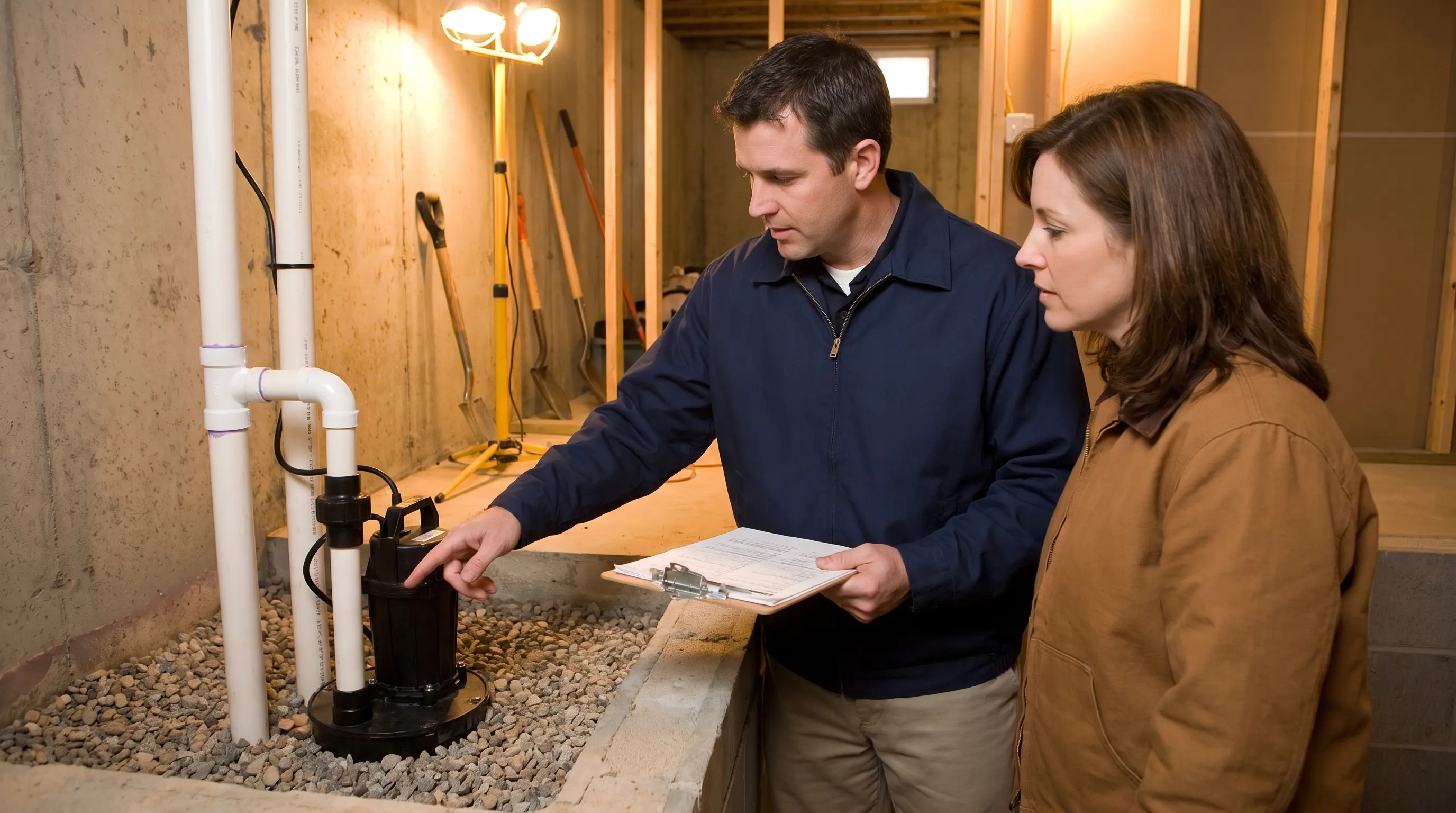
A project manager inspects your foundation for active and potential water entry points - wall cracks, the wall-floor joint, window wells, and the condition of any existing weeping tile - and checks your yard's grading and downspout placement. Where you've already had spring flooding, we specifically ask about the timing and pattern, since a seasonal-only flood often points toward a cause a generic inspection might miss. A written fixed-price proposal follows within 48 hours, at no charge and no obligation. See our basement waterproofing service page for the full method and pricing breakdown this estimate is based on.
Fixed-price means fixed. No ranges in your final contract, and nothing new on the invoice once it's signed - only pre-approved change orders if something unexpected turns up once work starts.
What Actually Moves the Price
Method & Scope
Crack injection is the least expensive fix. Interior drainage scales with perimeter length. Exterior work scales with perimeter, foundation depth, and access - and site-specific factors like uphill runoff can add scope beyond the standard waterproofing quote.
Foundation Age & Condition
Homes with original, failing weeping tile - common before 1980 - often need more extensive work than a newer home with a single, isolated entry point.
Why Booking Now Beats Waiting for the Next Melt
Every fall and winter that passes without addressing a known flood risk is a season closer to the next spring test. Booking now means any needed work can be scheduled and completed well before the ground even starts thawing, rather than racing a calendar that doesn't wait for permit reviews or contractor availability. It also means avoiding the citywide rush every February and March, when every Hamilton homeowner who put off their assessment over winter tries to book at once - appointment windows tighten, and completing work before the melt becomes a much tighter race against the clock.
Exterior excavation work also depends on ground conditions in a way interior drainage doesn't. A fall or early-winter project has the benefit of unfrozen, workable ground, while a late-winter booking risks hitting frozen soil that slows excavation or, in a hard freeze, delays the start date entirely until conditions improve. Interior drainage work isn't weather-dependent in the same way, but scheduling still tightens as the calendar moves closer to spring regardless of which method your assessment recommends.
There's a second, quieter cost to waiting too: a foundation with an active, undiagnosed entry point doesn't pause its deterioration between floods. Water finding its way in every spring, even if it's mopped up and forgotten by summer, is doing cumulative damage to framing, flooring, and the concrete itself - damage that has nothing to do with the eventual waterproofing fix and everything to do with how many seasons the underlying problem went unaddressed. Mould growth is a related concern that compounds the longer standing water and elevated humidity are left unresolved after each flood event, adding a health and remediation cost on top of the structural one that has nothing to do with the waterproofing itself.
Why Book Before You Compare Quotes
What If the Assessment Finds More Than Expected?
Sometimes a homeowner booking about spring flooding expects a straightforward crack injection and learns the real cause is a fully failed original weeping tile system needing full exterior work. Other times the opposite happens - what seemed like a serious recurring flood turns out to trace back to one isolated, easily sealed crack. Either way, we explain exactly what we found and why, walk through the options at different price points, and give you a fixed-price quote for the scope your specific basement actually needs - not the scope you called about, and not an inflated worst-case number.
A Real Example of How Pricing Breaks Down
To make the range concrete: a single, isolated crack causing seasonal seepage typically runs $500 to $2,000 to inject and seal, done same-day. A basement with floor-wall joint leaks across a full perimeter, needing interior drainage and a sump pump, usually lands between $8,000 and $20,000 depending on perimeter length and access. A home with failed original exterior weeping tile and active wall seepage - like our Chedoke case study above - moves into exterior territory, typically $15,000 to $40,000 depending on how much of the perimeter is affected and how deep the foundation sits. Properties with added complications like uphill runoff sometimes need supplementary grading or swale work beyond the base waterproofing quote, priced separately once the assessment identifies the need.
Most Hamilton spring-flooding projects land in the lower half of the exterior range, since full-perimeter failure on every wall simultaneously is less common than a problem concentrated on one or two elevations - exactly the kind of detail a proper assessment identifies rather than a generic online estimate. Soil conditions and foundation depth are what move the exterior number most within its own range - a shallow foundation on stable soil with easy equipment access costs meaningfully less to excavate than a deep foundation on a tight lot with difficult ground conditions, the same square footage of wall priced very differently depending on what's actually involved in reaching it.
Warranty and What Happens After Installation
Every BaseWorks waterproofing installation comes with a warranty on the completed system - 10 years on drainage installations - and every project closes with documentation of the diagnosed cause and the fix applied, useful for any future home sale or insurance question. Before we leave the job site, we walk you through basic maintenance: how to test a sump pump's float switch, where the discharge line exits, and what a healthy system looks like versus one that needs attention. Most homeowners never think about their waterproofing again once it's properly diagnosed and installed - the whole point of solving the actual cause, rather than managing the symptom every spring, is that it's meant to be the last flood you deal with.
Ready when you are: call (647) 692-2131 or request your free assessment online - most homeowners hear back within one business day.
What You Can Do Before the Assessment
Want to understand the full picture before you call? Our prevention guide covers the warning signs and methods, and our Chedoke case study shows how one recurring spring flood got permanently solved.
Frequently Asked Questions
Yes. A project manager maps your foundation's water entry points and checks your existing drainage, grading, and sump system. A written fixed-price proposal follows within 48 hours, at no cost and no obligation.
Interior drainage systems typically run $8,000 to $20,000. Exterior waterproofing runs $15,000 to $40,000 depending on foundation depth and access. A single active crack can often be resolved with crack injection alone for $500 to $2,000.
Fall or early winter gives the most scheduling flexibility and the best chance of finishing before the next melt. Waiting until late winter still works but competes with every other Hamilton homeowner having the same idea at the same time, so book as early as you can.