A Chedoke homeowner had flooded twice in three springs - never during summer storms, only during the melt. That pattern alone was the clue that cracked the case: this wasn't a typical waterproofing failure, it was a location-specific problem tied to the property's position on the escarpment. Here's how it was diagnosed and permanently solved.
The Problem
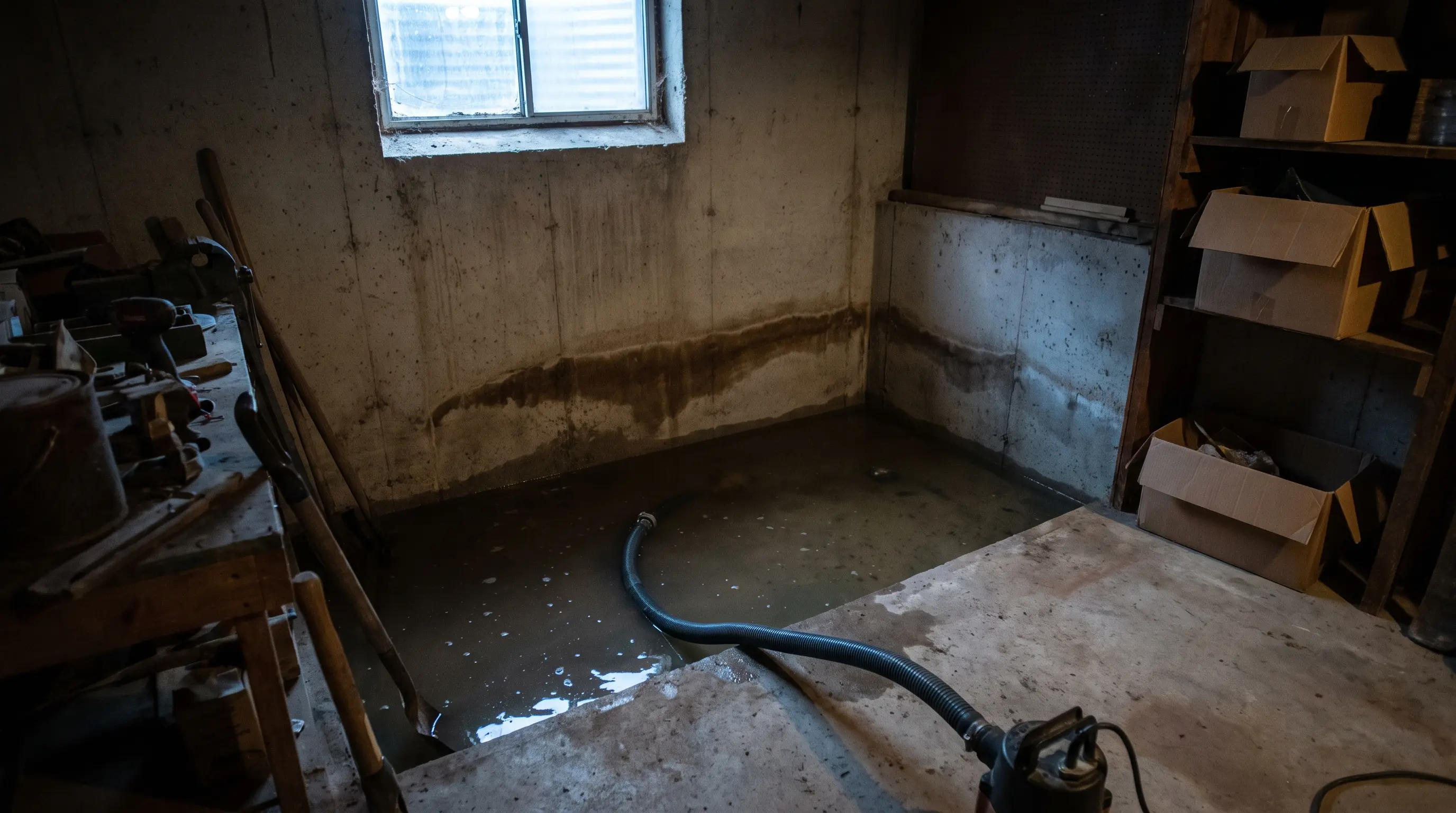
The home sat on a lot backing onto a wooded slope leading up toward the escarpment face, and every spring for three years running, the homeowner watched water pool along the rear foundation wall within days of the first serious melt. Summer thunderstorms, even heavy ones, never produced the same result - only spring did it, consistently. The homeowner had already had the basement's existing sump pump serviced and assumed that would solve it, but the next spring flooded anyway, worse than before, which was what finally convinced them the problem wasn't the pump at all.
By the third spring, they'd started keeping towels and a wet-dry vac staged near the affected corner as a matter of routine, checking the forecast every time temperatures climbed above freezing for more than a day or two. That kind of seasonal vigilance, while understandable, is exactly the sign of a problem that's been worked around rather than solved - and it was the detail that made our project manager ask specifically about the timing pattern rather than treating the flooding as a generic waterproofing failure.
The pattern that mattered: flooding only in spring, never in summer, pointed toward an added water source specific to melt season - not just a generically failing waterproofing system.
The Diagnostic Assessment
Our inspection found two separate issues layered on top of each other. First, the original 1970s weeping tile had failed - unsurprising for its age, and consistent with most Hamilton homes of that era. Second, and more specific to this property, the slope behind the house channeled snowmelt runoff from higher ground directly toward the rear yard during spring thaw, adding a volume of water the property's own drainage was never designed to handle even when fully functional. Summer rain fell and drained without that added escarpment contribution, which is exactly why the flooding pattern was so seasonally specific.
Why Exterior Waterproofing Alone Wasn't Enough
Fixing the weeping tile would address the property's own drainage, but it wouldn't stop the additional volume of escarpment runoff from reaching the foundation during the exact weeks it mattered most.
The Two-Part Solution
Full exterior waterproofing with new weeping tile, combined with a surface swale along the uphill property line to intercept and redirect runoff before it ever reached the yard.
The Work
Excavation along the rear wall exposed the failed original weeping tile, confirming it had silted up and partially collapsed in several sections, and revealed one hairline crack not visible from inside. Both were addressed as part of the same scope: the crack was sealed, a new crystalline membrane applied across the exposed wall, a drainage board installed, and all-new weeping tile set at the footing and tied into a discharge point routed well clear of the house. Separately, a shallow surface swale was graded along the uphill side of the property, shaped to intercept runoff coming down the slope and redirect it around the yard rather than through it - a landscaping-level intervention working alongside the waterproofing rather than replacing it.
Sizing the swale correctly required its own calculation, distinct from the waterproofing design itself - it needed enough capacity to handle the estimated peak runoff volume from a fast spring melt across the slope above, not just a token drainage ditch. Our team worked from the property's topography and the slope's approximate drainage area to size the swale's depth and grade, rather than guessing at a generic dimension, since an undersized swale would have simply moved the flooding problem a few feet without actually solving it.
Timeline From Second Flood to a Dry Third Spring
The homeowner called us the fall after the second flood, having decided a third repeat wasn't acceptable and wanting the work done well before the next melt. The free assessment happened within a week, and because the scope included exterior excavation but no structural permit requirement, the written proposal went out within a few days of that visit. The homeowner approved it quickly, wanting to lock in a fall installation window before ground conditions made excavation harder. Excavation and waterproofing took just under two weeks once the crew was on site, with the swale grading added as a final step once the main waterproofing work was complete and backfilled. The whole project, from first call to finished yard, wrapped up in just over six weeks - well ahead of the following spring.
The Result
- Zero water intrusion through two full spring melt seasons since completion, including one unusually fast melt
- One previously undetected foundation crack identified and sealed as part of the same project
- A surface swale now intercepts escarpment runoff before it ever reaches the yard
- 10-year warranty on the completed waterproofing system
This project is a clear example of why a repeat seasonal pattern is itself diagnostic information - the fact that flooding only happened in spring pointed our assessment toward a cause a generic waterproofing inspection might have missed entirely. For the full list of spring flooding warning signs and prevention methods, see our prevention guide, for service details on a project like this, visit our basement waterproofing service page, and if you're ready to get ahead of next spring, our free estimate guide covers what that assessment includes.
What This Project Taught Us About Escarpment-Adjacent Properties
The core lesson from this project now shapes how our project managers approach any assessment on a property backing onto escarpment slope or wooded higher ground: the question isn't just "is this foundation's own drainage sound," it's "how much water from beyond this property line reaches this specific spot, and when." A waterproofing system sized correctly for a property's own footprint can still be undersized for a lot that receives meaningful uphill contribution, and that gap only shows up seasonally, which is exactly the kind of pattern that's easy to miss without asking the right questions upfront. Since this project, we've made a seasonal flooding-pattern question - does it happen only in spring, only after certain storms, or consistently - a standard part of every waterproofing assessment, not just ones on escarpment-adjacent lots specifically.
The homeowner has since mentioned that the swale, beyond solving the flooding, has become an unplanned but welcome landscaping feature - a shallow, grassed channel that blends into the yard rather than standing out as visible infrastructure, doing its job quietly through every spring melt since.
Why Chedoke's Escarpment Location Makes This More Likely
Chedoke sits directly against the Niagara Escarpment on Hamilton's west side, with several streets backing onto wooded slopes leading up the face. That geography means properties here can receive runoff contributions that a flatter, more typical suburban lot never would - water that originates well beyond the homeowner's own property line and simply flows downhill toward whatever sits at the bottom. It's a factor our project managers specifically check for on any Chedoke assessment, since a standard interior-or-exterior waterproofing decision, made without accounting for uphill runoff, can leave a homeowner with a system that's correctly built but still undersized for what actually reaches the property during melt season.
Frequently Asked Questions
The property sat below a section of escarpment slope, so spring meltwater from higher ground added to the home's own runoff exactly when the failed weeping tile was least able to handle it. Summer rain, without that added escarpment runoff, stayed within what the aging system could just barely manage.
A swale was added along the uphill side of the property to intercept surface runoff before it reached the foundation, working alongside the new exterior membrane and weeping tile rather than relying on the waterproofing system alone to handle the extra volume.
No - the home has been through two full spring melt seasons since completion, including one unusually fast melt, with zero water intrusion in either.