A free sump pump assessment ends with a fixed price in writing, set before any work starts, and the price depends on three things: pit depth, pump type, and whether battery backup is added. This page explains what the visit covers, what moves the number, why booking before spring beats booking during a flood, and how quickly the install can be scheduled. When you are ready, our sump pump installation page is the place to book the assessment.
This is the booking page for the decision, not the explainer. If you are still working out whether you need a pump at all, start with our sump pump guide, and for a look at what an actual install involves, see our sump pump case study.
What's Included in a Free Sump Pump Assessment
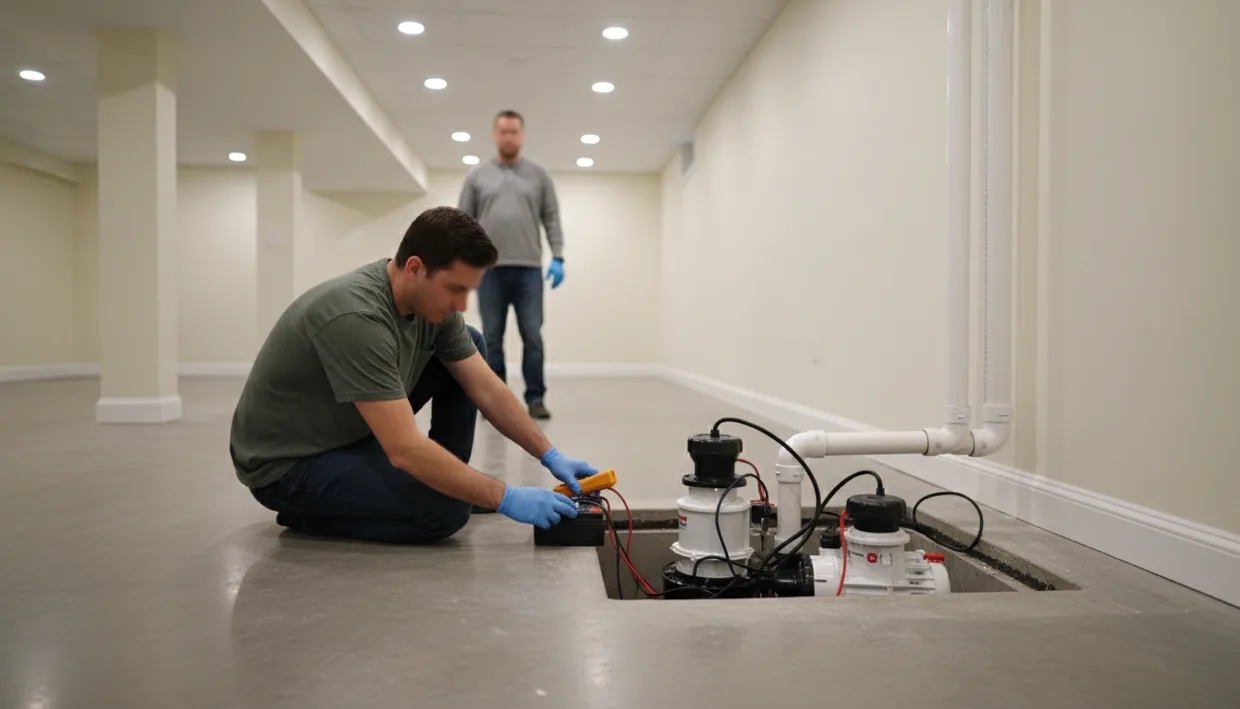
A technician visits your home, checks your existing drainage, assesses your water table risk, and confirms electrical access for the pump, then gives you a fixed price in writing before any work starts. The visit is free, and there is no obligation to book afterwards.
Each of those checks feeds the price. The existing drainage tells the technician whether weeping tile is already collecting water that needs somewhere to go. The water table risk helps decide whether a battery backup is worth recommending for your home. The electrical access settles where the pump can be powered and where a backup unit would sit. Together they turn a general idea into a specific scope that can be priced exactly.
The assessment gives you a number, not a range. Because the scope is confirmed on site, the price you are given is the price you pay, with no items added after work begins.
Price Drivers: Pit Depth, Pump Type, Backup Power
Three decisions set the price of a sump pump installation, and each one is confirmed during the assessment rather than assumed. Pit depth affects how much slab is cut and how much material is removed. Pump type affects the unit itself and how it is fitted. Backup power adds a battery unit and the work to connect it.
| Price Driver | What It Changes | How It Is Settled |
|---|---|---|
| Pit depth | Amount of slab cut and material removed | Measured on site against your drainage |
| Pump type | The unit supplied and how it is fitted | Chosen for your basement and how it is used |
| Backup power | A battery unit and its connection | Decided by your outage and flood risk |
| Discharge route | Length and path of the line to exterior grade | Confirmed against City of Hamilton requirements |
| Pairing with other work | Overlap with weeping tile or waterproofing | Quoted together when done in the same visit |
Pairing matters more than most homeowners expect. Pairing a pump with weeping tile or exterior waterproofing during the same visit typically costs less than scheduling them separately, since the excavation and labour overlap. If drainage work is likely in your future, saying so at the assessment lets the proposal cover both.
Why Book Before Spring Rather Than During a Flood
Booking before the wet season gives you a scheduled, priced, single-day job. Booking during a flood gives you an emergency, with a basement already taking on water, damaged belongings to deal with, and less room to compare options. A planned install lets the assessment, the fixed price, and the scheduling happen in order rather than all at once under pressure.
Hamilton's spring thaw is when groundwater and runoff peak, and it is also when storm-related power outages are most common. A pump installed and tested in the fall is in place before either problem arrives, and a battery backup decision made calmly is a better decision than one made while the water is rising. The cost of the work is the same whenever it is done, but the cost of waiting for a flood to force the decision is not.
What a Fixed-Price Proposal Covers
The proposal covers the whole scope in one number: the pit, the pump, the discharge line, any battery backup, the patching of the slab around the pit, and the cleanup. It is written down before work begins, so there is nothing to interpret afterwards and nothing added once the floor is open.
BaseWorks works to Ontario Building Code requirements and City of Hamilton permit requirements, so anything that needs confirming, such as how the discharge is routed, is settled before digging rather than after. The crew is our own, with no subcontractors, which means the person who assessed the job is accountable for the work that follows from it.
How Fast the Install Can Be Scheduled
Most installs are scheduled within one to two weeks of approving the estimate and completed in a single day. That is the practical advantage of a contained job: it does not need the engineering, permit lead time, or excavation that underpinning or full exterior waterproofing involves, so the gap between a decision and a working pump is short.
If a forecast or a recent wet spell makes the timing urgent, say so when you book. Scheduling is the one part of the process that can be adjusted to your situation without changing the price, because the scope has already been fixed by the assessment.
What Happens on Install Day
Once you approve the proposal, install day follows the scope that was agreed. The crew cuts the slab at the pit location, sets the pit and the pump, runs the discharge line to exterior grade, connects any battery backup, and patches the floor around the pit. A standalone install is completed in a single day, and the rest of the basement stays usable while it happens.
Before the crew leaves, the system is run so you can see the pump switch on and discharge. That check is part of the job rather than an extra, because a pump that has never been seen working is only assumed to work.
Why a Site Visit Beats a Phone Quote
A price given over the phone is a guess about a basement the person has not seen. The drainage, the electrical access, and the discharge route all change the scope, and none of them can be read from an address or a description. A quote that ignores them is either padded to cover the unknowns or low enough to grow once work begins.
A site visit removes that gap. It is the reason the proposal can be a fixed price rather than an estimate, and it is why the free assessment comes first. You see the technician, the technician sees the basement, and the number that results reflects both.
What to Have Ready for the Assessment
A few details make the visit faster and the proposal more precise. Knowing where water has appeared, whether a pit or pump already exists, and where the electrical panel and a likely discharge point are gives the technician a head start. None of it needs to be perfect, since confirming it is what the visit is for, but it shortens the conversation.
It also helps to say whether you plan any other basement work, such as finishing or waterproofing, because the pump location and discharge route are easier to plan once, around the whole project, than to revisit later.
Quick Checklist Before You Book
Frequently Asked Questions
A technician checks your existing drainage, water table risk, and electrical access, then gives you a fixed price in writing before any work starts.
Pricing depends on pit depth, pump type, and whether a battery backup is added. Your free assessment gives you an exact fixed price, not a range.
Pairing a pump with weeping tile or exterior waterproofing during the same visit typically costs less than scheduling them separately, since the excavation and labour overlap.
Most installs are scheduled within one to two weeks and completed in a single day.
Yes. The assessment and the fixed-price proposal are both free, and there is no obligation to book.