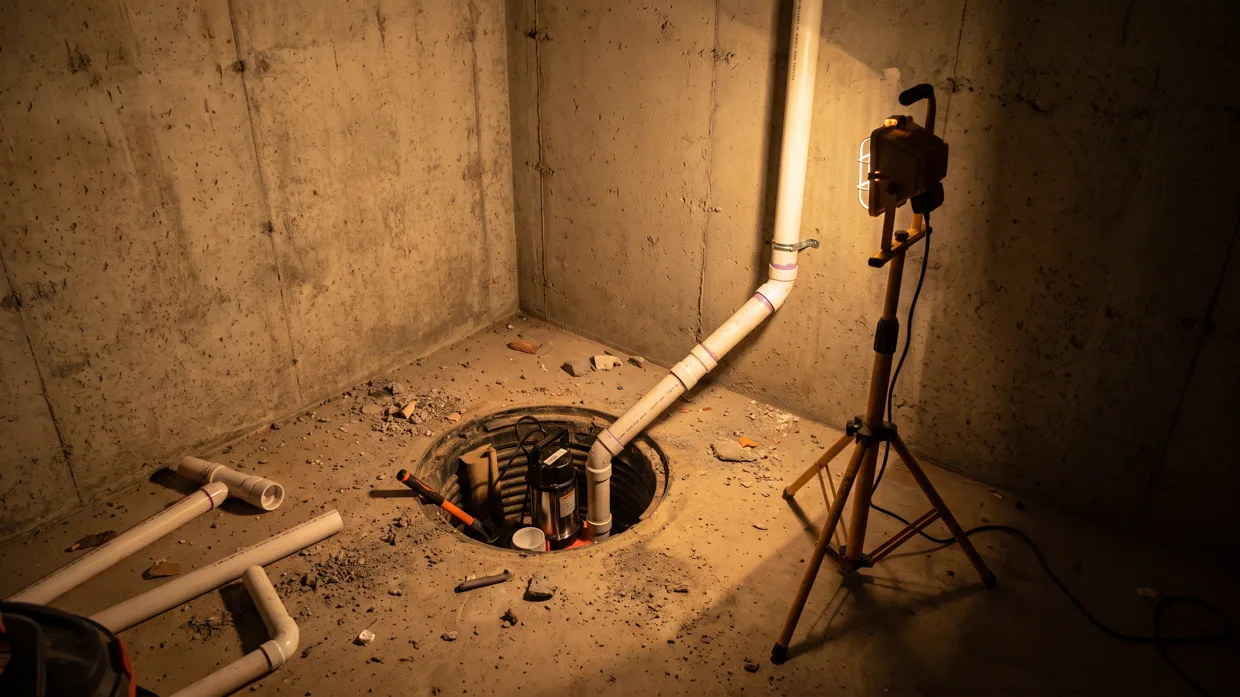
This Riverdale project was a standalone sump pump installation: a submersible pump with battery backup set in a new pit, with the discharge routed out to grade, completed as a one-day job. It is a good example of what a contained sump pump install actually involves, from the first site visit to the pump being tested, and of why the pump, the pit, and the backup were specified the way they were. If you are weighing the same decision for your own home, our sump pump installation page covers scheduling and fixed pricing.
This write-up walks through the project in the order it happened. For the qualifying questions that come before any install, such as whether your basement needs a pump at all, see our sump pump qualifying guide, which covers that decision in more depth than this case study does.
The Riverdale Basement's Water Problem Before the Install
The Riverdale basement had a drainage problem rather than a structural one: water was reaching the basement slab with nowhere to go, and there was no working pump to move it out. That is the situation a sump pump exists to solve. Weeping tile, where it is present, collects groundwater at the footing, but collected water still has to be lifted out of the system and discharged away from the house, and without a pump and pit that last step does not happen.
The first step on any project like this is confirming that the problem is a drainage one and that a pump is the right fix, rather than assuming it. A pump installed into a basement whose real issue is a cracked wall, a failed window well, or surface grading sloping toward the house will not solve the underlying cause. The site visit checks for those alternatives first, which is why the project began with an assessment rather than a quote over the phone.
A sump pump moves water, it does not stop it from arriving. It is the right answer when water is already being collected and needs somewhere to go, and the wrong answer when the water is entering through a different, fixable path.
Why a Submersible Pump With Battery Backup Was Specified
A submersible pump was specified because it sits inside the pit, runs quietly, and handles the grit and sediment that a basement pit inevitably collects. A pedestal pump keeps its motor above the pit, which is cheaper and easier to service, but it is louder and less tolerant of debris, so it suits mechanical-only basements better than living space.
A battery backup was added because the pump only protects the basement while it has power. Spring thaw is when groundwater and runoff peak, and it is also a season when storms can interrupt power, so a pump that depends entirely on household electricity can sit idle at the exact moment it is needed most. The backup switches over automatically when power drops and keeps the pump cycling until power returns.
| Specification | Choice on This Project | Reason |
|---|---|---|
| Pump type | Submersible | Quieter, handles debris, suits a basement that may be finished later |
| Power | Mains with battery backup | Keeps the pump running through a spring-thaw power outage |
| Pit | New pit cut into the slab | Gives the pump a low point to collect from |
| Discharge | Routed to exterior grade | Moves water away from the foundation |
| Project length | One day on site | Contained scope, no large-scale excavation |
The Pit Excavation and Discharge Routing
The pit is the only part of the project that opens the floor, and it is a small opening. A section of slab near the chosen location is cut, the pit liner is set into the excavation below it, and the surrounding concrete is patched around the liner once it is level. The rest of the basement stays usable throughout, since nothing about a standalone pump requires clearing the whole floor.
Discharge routing is where most of the planning goes. The discharge line carries water from the pump up and out through the foundation wall to a point at exterior grade, away from the foundation, and the route needs to avoid being discharged somewhere that sends water straight back toward the house or onto a neighbouring property. The pipe is fitted with a check valve so water that has been pumped up does not drain back into the pit each time the pump shuts off, which keeps the pump from cycling more often than it needs to.
Inspection and Permit Sign-Off
A standalone interior sump pump generally does not need a building permit in Hamilton, but the discharge routing to exterior grade or a storm connection should follow City of Hamilton bylaws, and a reputable contractor confirms that before digging rather than after. Ontario Building Code requirements also apply to any related work, so the scope is checked against them at the start rather than assumed to be exempt.
Before the job is closed out, the installed system is tested: water is run into the pit to confirm the pump switches on at the right level, discharges cleanly through the line, and shuts off again, and the battery backup is confirmed to engage when mains power is interrupted. That test is the sign-off that matters in practice, because it proves the system works before the crew leaves rather than the first time it is needed.
What a Homeowner Should Watch for the Following Spring
The first spring after an install is the real test, since it is the first full thaw with the system in place. The things worth checking are simple: that the pump cycles when the pit fills during heavy rain or snowmelt, that the discharge line runs clear and drains away from the house, and that the battery backup holds a charge and is replaced on the manufacturer's schedule.
A sump pump is a mechanical system with a finite life, typically 7 to 10 years with normal use, so a once-a-year test, pouring a bucket of water into the pit and confirming the pump activates, is a cheap way to catch a problem before the season that matters. Weeping tile that is already in the ground, whether original or replaced, only works if the pump at the end of it is running, which is why our spring flooding prevention guide treats the pump check as part of the seasonal routine.
What This Project Shows About Standalone Sump Pump Installs
A standalone installation is one of the more contained jobs in basement drainage work. It is usually a one-day project, it opens only a small section of the slab, and it does not require the scale of excavation that underpinning or full exterior waterproofing involves. That makes it a practical first step for a basement with a known water problem and an incomplete drainage system.
It also shows why the specification matters as much as the installation. The pump type, the backup, the pit location, and the discharge route are all decisions made before work starts, and each one is specific to the house. BaseWorks quotes the whole scope fixed-price after a site visit, so the number covers the pump, the pit, the discharge line, and the battery backup rather than adding items after the job begins.
Quick Checklist Before You Call
Frequently Asked Questions
A standalone sump pump installation is typically a one-day job, including pit excavation, pump setting, and discharge line routing to grade.
A standalone interior sump pump generally does not need a building permit, but discharge routing to the exterior grade or storm connection should follow City of Hamilton bylaws, which your contractor should confirm before digging.
Only a small section of slab near the pit location is cut and later patched, so the rest of the basement stays usable during the work.
A submersible pump run properly is quiet in daily use, with a brief motor sound only when it cycles on during a rain event.
Yes, and it should be. Weeping tile collects water but needs a pump to move it out, so a system with tile and no pump is incomplete.