A free weeping tile assessment ends with a fixed price in writing, and a recommendation for interior or exterior replacement based on what the technician finds in your home. This page explains what the inspection covers, what the price depends on, what the fixed-price proposal includes, how weeping tile pairs with a sump pump, and how scheduling works once you approve. When you are ready to book, our weeping tile installation page is the place to start.
This is the booking page for the decision, not the explainer. For how weeping tile works and what drives the price in more depth, see our weeping tile cost guide, and for a look at a real replacement from first visit to finished floor, see our weeping tile case study.
What's Assessed During a Free Weeping Tile Inspection
A technician inspects for signs of failure, checks your sump pit if one exists, and recommends interior or exterior replacement based on what they find, with a fixed price in writing. The inspection is free, and there is no obligation to proceed once you have the proposal.
The signs of failure are the starting point: recurring dampness, water marks along the base of the walls, or a sump pump that rarely cycles. The technician also looks at how the home was built and what surrounds it, because those details decide which approach makes sense. Nothing in the recommendation is assumed before the visit, which is why it is made on site rather than over the phone.
You get a recommendation and a written price together. The approach is chosen for your property, and the price covers that approach, so there is no gap between what is advised and what is quoted.
Price Drivers: Interior vs Exterior, Perimeter Length, Access
Three factors set the price, and the inspection settles each one. The first is whether interior or exterior replacement is recommended. Landscaping, hardscaping, and how deep the footing sits all factor in, and interior replacement is usually faster and less disruptive when exterior access is limited.
| Price Driver | What the Visit Confirms | Why It Matters |
|---|---|---|
| Interior or exterior | Which approach suits the property | Changes the scope, the equipment, and the disruption |
| Perimeter length | How much of the foundation needs new pipe | More length means more labour and material |
| Access | Landscaping, decks, narrow side yards, hardscaping | Limited access adds labour that has nothing to do with the pipe |
| Footing depth | How deep the system sits | Deeper footings mean more excavation for an exterior job |
| Sump pit and pump | Whether a pit and pump already exist | Decides whether they are added to the scope |
The same house can need a different answer from the one next door, which is why a flat figure is never reliable for this work. The measurements and observations from your home are what turn these factors into one price.
What's Included in the Fixed-Price Proposal
The proposal sets out the whole scope in one number: the new weeping tile, the excavation or channel it needs, the sump pit and pump where required, the restoration of whatever was opened, and the cleanup. It is written down before work begins, so there is nothing to interpret afterwards and nothing added once the work is underway.
Work is planned against Ontario Building Code requirements and City of Hamilton permit requirements, which are confirmed before digging rather than after. BaseWorks works with its own crews and no subcontractors, so the person who inspected the property is accountable for what follows from the inspection.
How This Pairs With a Sump Pump Install
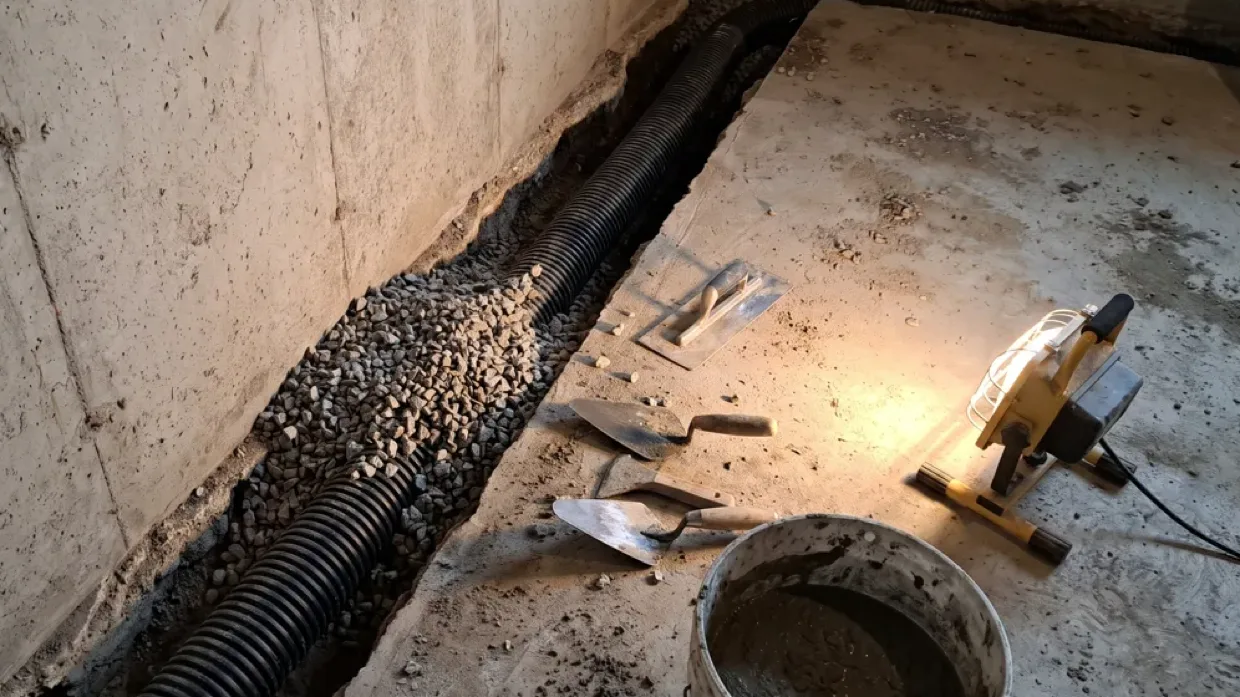
If your home does not already have a sump pump, a sump pump and pit are included in the proposal, since the new weeping tile needs somewhere to send the water it collects. Weeping tile with no pump at the end of it is only half a system, so the two are priced together rather than as separate decisions.
If a pump already exists, the inspection checks that it can handle the flow a restored system will deliver, because a line that has been clogged for years may have been sending far less water to the pump than a working one will. For the booking side of the pump itself, see our sump pump estimate page, which covers what that assessment includes.
Scheduling Once Approved
Once you approve the proposal, the work is scheduled around the approach that was recommended. Interior replacement usually takes 2 to 3 days, while exterior replacement can take longer depending on perimeter length and excavation depth.
If your timing matters, say so at the inspection so the schedule can be planned around it. Booking ahead of the wet season is easier than booking in the middle of it, since the work can be scheduled calmly rather than around water that is already in the basement.
Why an Inspection Beats a Phone Quote for Weeping Tile
Weeping tile is buried, which makes it the one part of the drainage system nobody can judge from inside the house. A price given over the phone is a guess about pipe the person has not seen and a property they have not walked. A quote that ignores the access, the footing depth, and the condition of the existing system is either padded to cover the unknowns or low enough to grow once the work begins.
An inspection closes that gap. It is the reason the proposal can be a fixed price, and it is why the free assessment comes first.
Pairing Weeping Tile With Other Basement Work
Weeping tile is often one part of a bigger plan, most commonly waterproofing, a new sump pump, or finishing the basement once it is dry. Doing related work in one project usually costs less than treating each piece as a separate job, because the floor or the ground is already open and the labour overlaps.
The inspection is the right moment to mention it. Knowing the whole plan lets the proposal be built around the entire project, so the drainage is done once and in the right order, with finishing last, instead of being retrofitted around work that has already been completed.
What Happens After You Approve
After you approve the proposal, the work is scheduled and the crew arrives with the scope already agreed. There are no new decisions to make on the day, since the approach, the pipe, the pit and pump where needed, and the restoration were all set out in writing beforehand.
When the work is finished, the area is restored and cleaned, and the system is run so you can see it working. That check is part of the job rather than an extra, because drainage that has never been seen working is only assumed to work.
What to Have Ready for the Inspection
A few details make the visit faster and the proposal more precise. Knowing where dampness has appeared, whether a sump pit and pump already exist, and roughly when the home was built gives the technician a head start. None of it needs to be perfect, since confirming it is what the visit is for, but it shortens the conversation.
It also helps to note anything outside that could affect access, such as a deck, mature trees, a narrow side yard, or hardscaping close to the foundation, because those details decide whether interior or exterior replacement makes more sense.
Quick Checklist Before You Book
Frequently Asked Questions
A technician inspects for signs of failure, checks your sump pit if one exists, and recommends interior or exterior replacement based on what they find, with a fixed price in writing.
Landscaping, hardscaping, and how deep the footing sits all factor in. Interior replacement is usually faster and less disruptive when exterior access is limited.
If your home does not already have one, a sump pump and pit are included in the proposal since the new weeping tile needs it to function.
Interior replacement usually takes 2 to 3 days; exterior replacement can take longer depending on perimeter length and excavation depth.
Yes, both are free, and there is no obligation to proceed after you receive the proposal.